
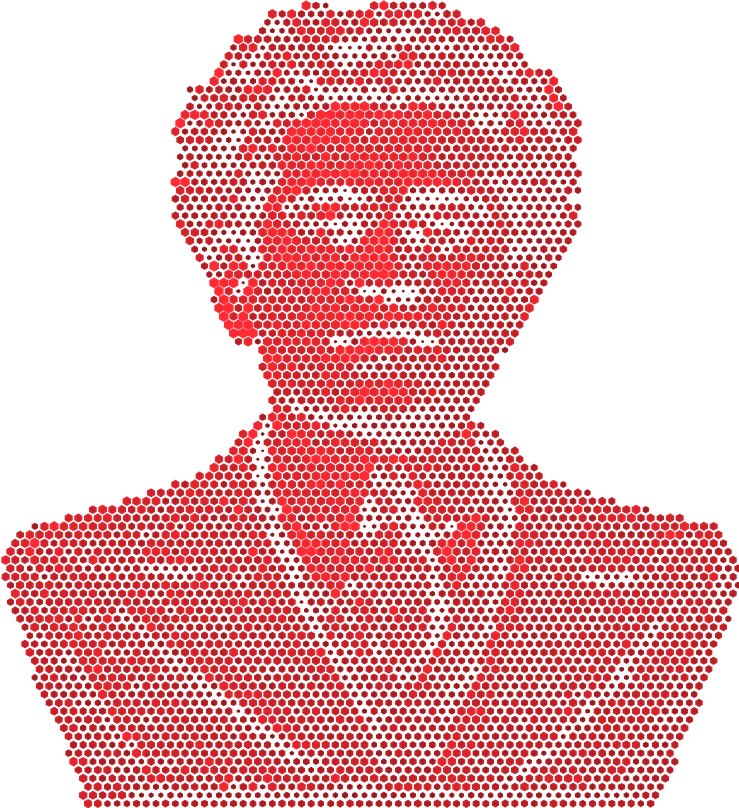
SHORT WRITINGS, 1916–1936
by Antonio Gramsci
Translated for the Marxists Internet Archive by Mitchell Abidor, Natalie Campbell, Michael Carley and Mark Camilleri
Thirty-one articles, speeches and letters: Gramsci's journalism during the First World War, the years of L'Ordine Nuovo and the Turin factory councils in 1919 and 1920, the founding years of the Communist Party of Italy, his speech in the Chamber of Deputies in May 1925, and a letter from prison to his son. Each piece says where it first appeared and who translated it.
NEWSPAPERS AND THE WORKERS (1916)
First published: Avanti! (Piedmont Edition) December 22, 1916. Translated by Mitchell Abidor for the Marxists Internet Archive.
Source: https://www.marxists.org/archive/gramsci/1916/12/newspapers.htm
These are the days of subscription campaigns. The editors and administrators of bourgeois newspapers tidy up their display windows, paint some varnish on their shop signs and appeal for the attention of the passer-by (that is, the readers) to their wares. Their wares are newspapers of four or six pages that go out every day or evening in order to inject in the mind of the reader ways of feeling and judging the facts of current politics appropriate for the producers and sellers of the press.
We would like to discuss, with the workers especially, the importance and seriousness of this apparently innocent act, which consists in choosing the newspaper you subscribe to. It is a choice full of snares and dangers which must be made consciously, applying criteria and after mature reflection.
Above all, the worker must resolutely reject any solidarity with a bourgeois newspaper. And he must always, always, always remember that the bourgeois newspaper (whatever its hue) is an instrument of struggle motivated by ideas and interests that are contrary to his. Everything that is published is influenced by one idea: that of serving the dominant class, and which is ineluctably translated into a fact: that of combating the laboring class. And in fact, from the first to the last line the bourgeois newspaper smells of and reveals this preoccupation.
But the beautiful – that is the ugly – thing is this: that instead of asking for money from the bourgeois class to support it in its pitiless work in its favor, the bourgeois newspapers manage to be paid by...the same laboring classes that they always combat. And the laboring class pays; punctually, generously.
Hundreds of thousands of workers regularly and daily give their pennies to the bourgeois newspapers, thus assisting in creating their power. Why? If you were to ask this of the first worker you were to see on the tram or the street with a bourgeois paper spread before him you would hear: “Because I need to hear about what's happening.” And it would never enter his head that the news and the ingredients with which it is cooked are exposed with an art that guides his ideas and influences his spirit in a given direction. And yet he knows that this newspaper is opportunist, and that one is for the rich, that the third, the fourth, the fifth is tied to political groups with interests diametrically opposed to his.
And so every day this same worker is able to personally see that the bourgeois newspapers tell even the simplest of facts in a way that favors the bourgeois class and damns the working class and its politics. Has a strike broken out? The workers are always wrong as far as the bourgeois newspapers are concerned. Is there a demonstration? The demonstrators are always wrong, solely because they are workers they are always hotheads, rioters, hoodlums. The government passes a law? It’s always good, useful and just, even if it’s...not. And if there’s an electoral, political or administrative struggle? The best programs and candidates are always those of the bourgeois parties.
And we aren’t even talking about all the facts that the bourgeois newspapers either keep quiet about, or travesty, or falsify in order to mislead, delude or maintain in ignorance the laboring public. Despite this, the culpable acquiescence of the worker to the bourgeois newspapers is limitless. We have to react against this and recall the worker to the correct evaluation of reality. We have to say and repeat that the pennies tossed there distractedly into the hands of the newsboy are projectiles granted to a bourgeois newspaper, which will hurl it, at the opportune moment, against the working masses.
If the workers were to be persuaded of this most elementary of truths they would learn to boycott the bourgeois press with the same unity and discipline that the bourgeoisie boycott the newspapers of the workers, that is, the Socialist press. Don’t give financial assistance to the bourgeois press, which is your adversary. This is what should be our battle cry in this moment that is characterized by the subscription campaigns of all the bourgeois newspapers. Boycott them, boycott them, boycott them!
MEN OR MACHINES? (1916)
First published: in Avanti!, 24 December 1916. Translated by Natalie Campbell for the Marxists Internet Archive.
Source: https://www.marxists.org/archive/gramsci/1916/12/men_or_machines.htm
The short discussion which took place in the last sitting of council, between our comrades and representatives of the majority, on the subject of plans for professional training, is worthy of comment, even if it is somewhat brief; a summary. The remarks of our comrade Zini ('when it comes to training for the people, humanistic and occupational currents are still in conflict. We need to able to combine them, but we must not forget that behind the worker there is still a man there, and we should not remove from him the possibility of broadening the horizons of his spirit, just so that we can enslave him right away; make him machine’) and the protests of councillor Sincero against philosophy (philosophy will find opponents, particularly when it makes statements which will affect certain interests) are not just simply, periods of conflict which are bound to happen from time to time; they are important clashes between people who uphold different fundamental principles.
1. Our party has still not decided upon a firm educational programme which differs from those traditional ones. Up until now we have been happy to continue under one general principle; the need for knowledge, whether it’s at a primary, secondary or even higher level. This is the principle that we have expounded, advocated with force and energy. We can be sure that the drop in the illiteracy rate in Italy is not so much down to laws for compulsory education, but spiritual life itself; to the awareness of certain specific needs in that aspect of life, which socialist propaganda knew how to awaken in the Italian proletariat. But that’s all we've done. Schools in our country have remained as, in essence, bourgeois institutions, in the worst sense of the word. Middle and secondary schools, which belong to the state, and therefore, are supported through the people’s taxes, through taxes which are also paid by the proletariat, cannot be attended by anyone other than the young sons and daughters of the bourgeoisie, who enjoy the economic independence necessary to be able to carry out their studies to the highest standard. A child from the proletariat, even if he is intelligent and in possession of all the abilities needed to become a knowledgeable man, is forced to waste his talent on other pursuits, to become a rebel, or to educate himself; that is to say (apart from some notable exceptions), he is forced to become a half man, a man who has not been able to give all he could have, if he had been completed by and made stronger through the discipline that school offers. Knowledge is a privilege. Schooling is a privilege. And we don’t want it to be that way. All young people should be equal in terms of knowledge. The State shouldn’t be paying for the schooling of imbeciles and those who are just plain mediocre, merely because they are children of the wealthy; equally it shouldn’t be excluding those who are intelligent and more than capable, just because they're the children of the proletariat. Middle and secondary schools should be for those who have shown themselves to be worthy. If it is in general interest that they exist, even if they're supported and ruled by the State, it is also in general interest that all those who are intelligent enough should have access to them, whatever their economic background. The sacrifice of the collective is only justified if it is for the benefit of those who really deserve it. The sacrifice of the collective should be made so as to give economic independence to those who are talented, so that they can dedicate their time completely to study, so that they can study in earnest.
2. The proletariat are excluded from middle and secondary schools because of current societal conditions which mean that there is a division of labour among men, in a most unnatural manner; it is not based on individual ability and therefore, devastates and corrupts production. This class has to fall back on subsidiary schools; those of a technical and professional orientation. These technical schools were established on a democratic basis by the Casati ministry, yet, because of the antidemocratic provisions of the State budget, they have gone through a transformation which has destroyed their very essence. Now they have mostly become accessories to the classical schools, an innocent outlet for the petty-bourgeoisie obsession with finding a job. The admission fees which are constantly on the rise, and the practical possibilities which they offer for life, have made these schools too somewhat of a privilege. The majority of the proletariat is excluded from them, automatically, because of the uncertain, random life that the wage-earner is forced to lead; a life which does not go hand in hand with following a course of study.
3. The proletariat needs a school which is neutral. A school which gives children the possibility of educating themselves, of becoming men, of acquiring the general knowledge needed to develop their individual character. A humanistic school then, as the ancients and the most recent men of the Renaissance intended it. A school which doesn’t mortgage the child’s future or constrain his will, his intelligence, his conscience, so as to set him off on the road with a fixed destination. A school of liberty and free initiative and not a school of subjugation, where people are quasi mechanised. Even the children of the proletariat should have the power of choosing from all the possibilities available, all areas should be free to them so they can fulfil their own individual purpose in the best way possible, and consequently in the most productive way possible, not only for themselves but for the rest of the society. Vocational schools should not become a breeding ground for monsters, dryly educated for a job, without being given broad ideas, broad knowledge, without any spirit at all; just an accurate eye and a steady hand. Through professional education too, men can be allowed to break out of their childhood; as long as this education is just that; educational, not merely informative, not just the study of manual procedures. Councillor Sincero, who is an industrialist, merely shows himself to be of the harsh bourgeoisie when he protests so against philosophy.
Certainly, for the harsh bourgeois industrialists, it might be more useful to have worker-machines instead of worker-men. Yet the sacrifices which society makes in order for progress, in order for the best, most perfect men to fly from its nest, who themselves will help to improve things even further, should see a wealth of returns which benefit the whole of society, not just one type of person, or class.
It’s a problem of rights and of power. And the proletariat should be on alert, so it doesn’t suffer even more oppression, as it has suffered so much already.
CHARACTER (1917)
First published: Il Grido del Popolo, March 3, 1917. Translated by Mitchell Abidor for the Marxists Internet Archive.
Source: https://www.marxists.org/archive/gramsci/1917/03/character.htm
Our adversaries don’t worry themselves with judging the attitude of socialists in the same way as they do principles and methods that the socialists have always professed and followed. Doing this would mean truly considering them and doing something concrete. They don’t even attempt this judgment, being incapable of it.
They lose their way when placed before men of character, grope about in the darkness, giving up all hope in the blind alleys of gossip, of slander, of defamation. They don’t understand a straightforward, strictly coherent demeanor. They are hypnotized by facts, by current events. They don’t understand the man of character, who weighs and judges facts not in and of themselves as much as in their relationship with the past and the future; that facts are thus judged primarily for their effect, their eternal nature. They are mystics of the fact. And a mystic can’t judge: he can only bless or hate.
But this is the strength of Italian socialists. To have preserved character. To have succeeded in defeating sentimentality, to have succeeded in throttling the throbbing of the heart as a stimulus to action, as a stimulus to the manifestations of collective life. In this period of history the Italian Socialists have realized for historic ends humanity in its most perfect form. A humanity that doesn’t fall into the easy traps of illusion. A humanity that has rejected as useless and harmful the inferior forms of spiritual life: the impulses of the tender heart and sentimentality.
They have rejected this consciously. Because they knew how to assimilate the teachings of their greatest teachers, as well as the teachings that are spontaneously produced by bourgeois reality, bitten into by the reagents of socialist criticism. The Italian Socialists have remained steadfast in their ranks determined by the demands of the social class. As a collective they are not disturbed by the painful spectacles that are presented to them. As a collective they don’t faint when the still breathing corpse of a murdered child is thrown at their feet. The commotion that every individual has felt, the heartache, the sympathy that every individual has felt hasn’t scratched the granite-like compactness of the class.
If every individual has a heart, the class, as such, does not have a heart in the sense that feeble humanism usually gives it. The class has a will, the class has a character. All of its life is molded by this determination, this character, with nothing left over. As a class it can have no other form of solidarity than that of class, no other form of struggle than that of class, no other nation than the class, that is, the International. Its heart is nothing but the consciousness of its class being, the consciousness of its ends, the consciousness of its future. Of the future that is its alone, for which it demands the solidarity and collaboration of no one, for which it doesn’t desire the throbbing of anyone’s heart. There only throbs, in its immense dynamic and creative potential, its tenacious determination, implacable towards all who are foreign to it.
Our adversaries don’t understand this. In Italy character is not understood. And this is the only thing in which the Socialists can benefit and have benefited Italianness. They have given Italy that which it has lacked up till the present moment: A living and dramatically throbbing example of an adamantine and superbly proud character.
THE REVOLUTION AGAINST 'CAPITAL' (1917)
First published: Avanti!, 24 December 1917. Source: La Rivoluzione contro il Capitale. Translated by Natalie Campbell for the Marxists Internet Archive.
Source: https://www.marxists.org/archive/gramsci/1917/12/revolution-against-capital-alt.htm
The Bolshevik revolution has become a definitive part of the more widespread revolution of the Russian people. The Maximalists, up until two months ago, had been the force necessary to stop the cause grinding to a halt, to stop the road to the future coming to a dead end, to give rise to a final settlement – that would have been a bourgeois settlement. They have taken possession of power, they've established their dictatorship, and they are developing forms of socialism that mean the revolution will finally have to ease off in order for things to continue harmoniously, without too many great conflicts; with its basis being everything that has already been achieved.
The Bolshevik revolution is based more on ideology than actual events (therefore, at the end of the day, we really don’t need to know any more than we know already). It’s a revolution against Karl Marx’s Capital. In Russia, Marx’s Capital was the book of the bourgeoisie, more than of the proletariat. It was the crucial proof needed to show that, in Russia, there had to be a bourgeoisie, there had to be a capitalist era, there had to be a Western-style of progression, before the proletariat could even think about making a comeback, about their class demands, about revolution. Events overcame ideology. Events have blown out of the water all critical notions which stated Russia would have to develop according to the laws of historical materialism. The Bolsheviks renounce Karl Marx and they assert, through their clear statement of action, through what they have achieved, that the laws of historical materialism are not as set in stone, as one may think, or one may have thought previously.
Yet, there is still a certain amount of inevitability to these events, and if the Bolsheviks reject some of that which is affirmed in Capital, they do not reject its inherent, invigorating idea. They are not ‘Marxists’, that’s what it comes down to: they have not used the Master’s works to draw up a superficial interpretation, dictatorial statements which cannot be disputed. They live out Marxist thought, the one which will never die; the continuation of idealist Italian and German thought, and that in Marx had been corrupted by the emptiness of positivism and naturalism. In this kind of thinking the main determinant of history is not lifeless economics, but man; societies made up of men, men who have something in common, who get along together, and because of this (civility) they develop a collective social will. They understand economic matters, they evaluate them and adjust them according to their will, until it is this which becomes the driving force of the economy, that which shapes objective reality and lives and moves; it takes on the characteristics of a scolding hot sheet of metal, which can be sculpted in any way they so choose.
Marx predicted the predictable. Though he couldn’t predict the European war, or better put, he couldn’t predict how long it would go on for and the effects it would have. He couldn’t predict that this war, 3 years of unspeakable suffering, of unspeakable misery, would reawaken the Russian people’s collective will like it did. A will, of such a sort normally _needs a long period of development in order to permeate society; it _normally needs a long line of class experience. Man is lazy, it needs to organise itself, firstly on the exterior, it needs to form bodies and associations, but then on the interior, in terms of thought, of will [...] it needs a never-ending continuity and a host of external motivations. This is why, _normally, _the rules of Marxist historical criticism take a hold on reality, grasping it with both hands and making everything appear clear. _Normally, _it’s through an ever-more intense class struggle that the two classes of capitalism are able to make history. The proletariat is fully aware of its current state of misery, its continuing poverty and it pressures the bourgeoisie to create better conditions. It fights, obliging the bourgeoisie to better techniques of production, so that the most urgent needs of the proletariat can finally be satisfied. It’s a long, hard road towards something better, which helps to speed up the pace of production and continually increase the amount of goods which can be of use to all. Many fall along the way, which only makes the wishes of those who remain even more urgent. The masses are in a permanent state of turmoil, and because of such chaos they become even more ordered in their thinking, they become ever more conscious of their power, of their ability to take on social responsibility and to become the judges of their own fate.
That’s what happens normally. When events run in a certain order. When history passes through ever more complex situations; situations full of increasing meaning and importance, yet at the same time that are so similar. However in Russia, war only helped to ignite the people’s will. After the suffering which had built up over three years, they found themselves becoming one very quickly. Famine was impending, hunger, or death by hunger, could strike anyone, crush tens of millions of men in an instant. Different wills were united, firstly, in a superficial way, but then in an active and spiritual sense after the revolution.
Socialist thinking allowed the Russian people to reach the experiences of other proletariats. Socialist thinking instantly gave life to the history of the proletariat, to their fight against capitalism, the long line of pains they have had to go through to free themselves ideally from the clutches of a servility which made them poor; it allowed them to create a new consciousness and be living proof of a time yet to come. Socialist thinking gave rise to the social will of the Russian people. Why should they have to wait so that the history of England is repeated in their own country, so that a bourgeoisie is formed in Russia, that class struggle is ignited, that a class consciousness is born, that the fall of the capitalist world finally comes? The Russian people have already gone through these events in their minds, and in the mind-set too, of a minority group. They've overcome these experiences. They are what they needed in order to establish themselves, just as they will need the capitalist experiences of the West in order to reach, in a short period of time, the heights of Western production. North America is, in capitalist terms, more advanced than England, because in North America the Anglo-Saxons started from a point which England only reached after a long evolution. The Russian proletariat, educated in Socialism, will start its history from a high level of production that England has only got to today; its starting point will be something which has been accomplished elsewhere, and from this accomplishment it will be driven to reach the economic maturity that Marx sees a necessary for collectivism. Revolutionaries will themselves create the conditions needed for a full and complete fulfilment of their ideal and they will do so in less time than capitalism would have. Socialist criticisms of the bourgeois system, which highlight its shortcomings and the unequal distribution of wealth, will enable revolutionaries to do better, to avoid such shortcomings themselves, to not fall into the same traps. In the beginning it will be a collectivism based on misery, on suffering. But it would have been these very conditions of misery and suffering which would have been inherited from a bourgeois regime. Capitalism in Russia, right now, wouldn’t be able to do any more than collectivism can. In fact at the moment it would do much less, as it would find itself facing a discontent and rabid proletariat, incapable of putting up any longer, with the pain and disappointment that economic poverty brings. Even from an absolute, human point of view, pre-empted socialism can be justified in Russia. The suffering that will be left behind after peace will only be tolerated by the proletariat as long as they feel that their will is intact, that through their persistence they will be able to make it end as soon as possible.
One has the impression that the Maximalists, at this time, are the natural, biological expression, needed to stop the Russian population falling into an atrocious state of ruin, to ensure that the Russian population, caught up in the autonomous, colossal effort of ensuring their own regeneration, will be able to feel a little less the pain caused by the ravenous wolf’s bite; so that Russia doesn’t become a huge forest of wild beasts, tearing each other to pieces.
ONE YEAR OF HISTORY (1918)
First published: Il Grido del Popolo, March 16, 1918. Translated by Mitchell Abidor for the Marxists Internet Archive.
Source: https://www.marxists.org/archive/gramsci/1918/03/one-year.htm
One year has passed since the day when the Russian people forced Tsar Nicholas to abdicate and take the road of exile. The commemoration of the anniversary is hardly merry. Sorrow, ruin, the appearance of collapse, the bourgeois counter-offensive with German bayonets and guns.
Is the Russian Revolution finished? Has the proletariat in Russia failed in the greatest experiment in history? The look of things doesn’t give comfort: the German generals have arrived in Odessa, the Japanese are said to be ready to intervene, fifty million citizens have been torn from the revolution, and with them the most fertile lands, the ways to the seas, the roads of civilization and economic life. The Revolution was born in pain and despair, and continues in pain and suffering, gripped in a ring of enemy power, immersed in an economic world refractory to its ideal, to its goals.
In March 1917 the telegraphs announced that a world had collapsed in Russia, a world already ephemeral, the inanimate shadow of a power that was surging up, which was growing stronger, which dragged itself along with bloody violence, with the repression of spirits, with the torture of flesh torn to pieces. This power gave life to a huge state machine. 170 million human creatures were forced to forget their humanity, their spirituality in order to serve. To serve what? The idea of the Russian Empire, of the Great Russian State which had to reach the warm and open seas in order to secure an outlet for its economic activity from every size of competitor, from the surprise of war. The Russian Empire was a monstrous necessity of the modern world. In order to live, to develop, to ensure a life of activity ten races, 170 million men had to submit to a ferocious state discipline; had to renounce their humanity and be pure instruments of power.
In March 1917 the monstrous machine collapsed, rotted, decomposed by its congenital impotence. Men rose up, looked each other in the eye. Human values took the upper hand. Exteriority no longer had any value: too much wrong had been done, too much pain had been caused, too much blood had been spilled. History, true history had begun. Everyone wants to be the master of his own destiny, wants society to be molded in obedience to the spirit, and not vice versa. The organization of life in common in society should be the expression of humanity, should respect autonomy and liberty. The new history of humanity had begun; a new experiment in the history of the human spirit had begun. These coincided with the expressions that the socialist ideal had given to man’s elementary needs. The socialists as a political class reached power without too much effort; the words of their faith coincided with the confused and vague aspirations of the Russian people.
They had to make the new organization a reality, had to pass new laws, stabilize the new regulations. The past continued to exist, but it was falling apart. It gave the appearance of collapse, disorder, confusion. It seemed as if they were returning to barbarian society, that is, to non-society. The past continued to live beyond the land of liberty and sought vengeance.
The new order was slow in being realized. Slow? O skeptical wicked men, it wasn’t slow, for one doesn’t remake society by fiat, because the evil of the past is not an edifice of papier-mâché that is brought down in an instant. Life is a painful effort, a tenacious struggle against habits, against bestiality and the coarse instincts that continuously make themselves known. A new human society isn’t created in six months when three years of war have exhausted a country, have deprived it of the mechanical means needed for civil life. Millions and millions of men aren’t organized in freedom just like that, when everything is against it and all that is left is the indomitable spirit. The history of the Russian Revolution hasn’t been closed and will not close with the anniversary of its beginning.
In the same way that a canto exists in the imagination of the poet before it does on the printed page, the arrival of a new social organization exists in consciousnesses and wills. They are changed men; this is what is important. They want exteriority, the words on the page. They cry out at every failure, at every apparent reverse.
Historians ask of the Russians what has never been asked of past revolutions: the immediate creation of a new order. They devise plans that have never existed, hopes that have never been dreamed of. And these plans, these hopes confront a current reality to end in failure, in collapse. With a reality which is said to issue from a year of new history, but which issues from centuries of the most bestial repression in human history. The impossible is asked of them, which has never asked of the men of the past.
How many times did the French Revolution see Paris occupied by the enemy? And the occupation came after Napoleon had dictatorially organized the revolutionary forces and led the French armies from victory to victory. And France was a small thing compared to the exterminated Russia.
No, mechanical force has never prevailed in history; it is men, it is consciousness and the spirit that molds external appearances and always triumphs in the end. A year of history has closed, but history continues. (The next six lines were censored.)
RED INK (1919)
First published: Avanti!, 4 April 1919. Translated by Michael Carley for the Marxists Internet Archive.
Source: https://www.marxists.org/archive/gramsci/1919/04/red-ink.htm
The balance of Soviet Russia is negative, cruelly negative. “Momento” weeps for it like a little calf, “Momento” suffers for it with all its Franciscan soul. Think, think: 13,700 people executed as counter-revolutionaries on the first of January 1919, without counting those condemned “on intuition”; think, think, the same Commissar Lissoflski has declared it. And a deficit of seventeen billion, think, think, weep, weep, oh little hearts of butter lodging in the candy floss breasts of the tender Order of Perpetual Adoration or the curates of feeling. Vade retro, oh communism, here the holy water against the Soviet; cruel and most base apocalyptic monsters, never will you tempt the most tender Order, never will you hear the Te Deum in your glory.
When has there ever appeared on the immaculate earth a slaughter machine, a scourge destroying lives and billions, so horrifying as the Soviet Revolution? What was the slaughter of the Albigensians? A children's garden game: and, please, do not think for a moment that Pope Innocent was a precursor of “intuition,” when he preached of killing, of killing, so much so that the Merciful Lord might, in his omniscience, divide the white lamb from the worm-ridden sheep; you would only show yourself up as an anticlerical vulgarian, without a rudiment of theology or catechism.
What was the war of the peasants in Germany? A Nuremberg toy, even if it be affirmed that it destroyed twelve million human lives. What were the destructions of the Flemish, the Incas, and of the boors carried out by the most Catholic kings of Spain? They were services to the holy faith, most devoted corvées of vassals of Our Omnipotent Lord Jesus Christ. What are the ten million dead and ten million invalids and injured, heritage of the war which His Holiness Benedict called “useless slaughter,” but which “Momento” believes most useful, though His Holiness is Pontiff of the Catholic Church, while “Momento” is only the organ of the Partito Popolare Italiano.
What are the twenty million dead of grippe or Spanish flu, or pulmonary plague, that is war plague, caused and propagated and cultivated by the conditions created and left by the war? What are the thousands and thousands of human creatures who die every day of hunger, scurvy, exposure in Romania, in Bohemia, in Armenia, in India, to note only those countries friends of the Entente.
What is the eighty billion deficit in the Italian accounts, the one hundred and twenty billion in the French accounts, the two hundred billion in damages caused by the war?
What are the one hundred and fifty million Russians exterminated by the Czarist government in the repression of the Soviets in 1905? What would the twenty million Russians do who would be exterminated if the counter-revolution of Generals Krasnof, Denikin and Kolchak triumphed, the friends of the Entente who impale and expose for three days one worker in ten in the towns they manage to reconquer, the friends of the Entente who send armoured wagons full of Soviet soldiers cut to pieces to Petrograd.
What are they, what are they? Trifles, nothings, magnanimous actions compared to 13,700 executed and a deficit of 17 billion. The social revolution is a scourge, the apocalyptic monster. What is a proletarian life, what is it worth compared to a bourgeouis life? You study economics, surely: a bourgeouis is worth at least ten proletarians; so the 13,700 shot by the Soviets are worth 137 million proletarians and they are not 137 million proletarians which international capitalism has bled for its affairs, to fertilize its masses.
Weep, weep, then, most tender Order and most delicate curates of Piedmont, and do not allow yourselves to be tempted by communism, by Soviets, by the social revolution.
THE PRICE OF HISTORY (1919)
First published: L'Ordine Nuovo, 7 June 1919. Translated by Michael Carley for the Marxists Internet Archive.
Source: https://www.marxists.org/archive/gramsci/1919/06/price-history.htm
What does history still demand of the Russian proletariat in order to legitimize and make permanent its conquests? What further price of blood and sacrifice does this absolute monarch of destiny claim of men?
The difficulties and objections which the proletarian revolution must overcome have shown themselves immensely superior to those of any other revolution of the past. These tended only to correct the form of national and private property in the means of production and exchange; they affected a limited part of assembled humanity. The proletarian revolution is the maximum revolution: since it wishes to abolish private and national property, and abolish classes, it involves all men, not just a part of them. It obliges all men to move, to take part in the struggle, to participate openly. It fundamentally transforms society: from a multi-cell organism; it places at the base of society the organic nuclei of that same society. It constrains all of society to identify itself with the State, it requires that all men be spiritually and historically conscious. Therefore the proletarian revolution is social: therefore it must overcome unprecedented difficulties and objections, therefore history demands for its successful outcome monstrous prices such as those the Russian people is constrained to pay.
The Russian revolution has triumphed up to now over all the objections of history. It has revealed to the Russian people an aristocracy of statesmen which no other nation possesses; they are a couple of thousand men who have dedicated their lives to the (experimental) study of political and economic science, who for decades in exile have analyzed and dissected all the problems of revolution, who in the struggle, in the unequal duel against the power of Tsarism, have tempered their characters like steel, who, living in contact with all the forms of capitalist civilisation of Europe, of Asia, of America, immersing themselves in the world currents of trade and history, have acquired a consciousness of exact and precise responsibility, cold and cutting like the sword of the conquerors of empires.
The Russian communists are a leading caste of the first order. Lenin has shown himself, testify all who have approached him, to be the greatest statesman in contemporary Europe; the man who freed the prestige, which inflames and disciplines peoples; the man who manages, in his vast brain, to dominate all the social energies of the world which can be turned to the service of the revolution; who holds in check and beats the most refined and vulpine statesmen of the bourgeois routine.
But something else is the communist doctrine, the party which propagates it, the working class which consciously embodies it, something else is the immense Russian people, broken, disorganized, cast into a dark abyss of poverty, barbarism, anarchy, of dissolution by a long and disastrous war. The political greatness, the historical masterpiece of the Bolsheviks consists exactly of this: in having raised the fallen giant, in having given back (or given for the first time) a concrete and dynamic form to this debacle, to this chaos; in having known how to weld the communist doctrine with the collective consciousness of the Russian people, in having laid the solid foundations on which the communist society has begun its process of historical development, in having, in a word, historically translated into experimental reality the Marxist formula of the dictatorship of the proletariat. The revolution is such and not an empty bladder of demagogic rhetoric, when it embodies itself in a type of State, when it becomes an organized system of power. A society does not exist if not in a State, which is the source and the end of all law and of all duty, which is the guarantee of permanence and of the success of every social activity. The proletarian revolution is such when it gives life to a typically proletarian State, keeper of proletarian law, which develops its essential functions as emanation of proletarian life and power.
The Bolsheviks have given state form to the historical experiences of the international working and peasant class; they have organized in a complex and flexibly articulated organism its most intimate life, its tradition and its deepest and most loved spiritual and social history. They have broken with the past, but they have continued the past; they have split a tradition, but they have developed and enriched the lively tradition of the proletarian, worker and peasant, class. In this they have been revolutionary, because they have instilled new order and discipline. The break is inevitable, because the essence of history enters, it is without the possibility of turning back, for otherwise an enormous disaster would fall on Russian society. And so begins a formidable duel with all the necessities of history, from the most elementary to the most complex, which it is necessary to incorporate into the new proletarian State.
The new State needed to win the support of the loyal majority of the Russian people. It needed to reveal to the Russian people that the new State was its State, its life, its spirit, its tradition, its most precious asset. The State of the Soviets had a leading caste, the Bolshevik Communist Party; it had the support of a social minority representing the consciousness of the class, of the vital and permanent interests of the whole class, the industrial workers. It has become the State of the whole Russian people and thus the assiduous and incessant work of propaganda, of enlightenment, of education of the exceptional men of Russian communism, led by the clear and direct will of the master of all, Nikolai Lenin [sic], has gained the tenacious perseverance of the Communist Party, the trust and the enthusiastic loyalty of the workers. The Soviet has shown itself immortal as the form of organized society which adheres flexibly to the multiple permanent and vital (economic and political) needs of the grand mass of the Russian people, which embodies and satisfies the aspirations and hopes of all the oppressed of the world.
The long and wretched war had left a sad inheritance of poverty, of barbarism, of anarchy; the organization of social services was broken; human society itself had broken down into a nomadic horde of those without work, without will, without discipline, a dull material in decomposition. The new State is collecting from the ruins the worn fragments of society and is reassembling them, rewelding them: it is recreating a faith, a discipline, a soul, a desire of work and progress. A task which could be the glory of a whole generation.
It is not enough. History is not satisfied with this proof. Formidable enemies are lined up implacably against the new State. False coin is struck to corrupt the citizen, his hungry stomach is tantalized. Russia has been cut off from every exit to the sea, from all traffic, from any solidarity; it has been deprived of the Ukraine, of the Donetz basin, of Siberia, of every market for raw materials and foodstuffs. On a front of ten thousand kilometres armed bands threaten invasion: uprisings, betrayals, vandalism, acts of terrorism and sabotage have been bought. The most acclaimed victories are transformed, by treachery, into sudden reverses.
No matter. The power of the Soviets resists: from the chaos of the disaster it creates a powerful army which is becoming the backbone of the proletarian State.
Squeezed by immense antagonistic forces it finds in itself the intellectual vigour and the historical flexibility to adapt to the necessity of the situation, without yielding, without compromising the happy process of development towards communism.
The State of the Soviets thus shows itself to be a fatal and irrevocable moment of the fatal process of human civilization, to be the first nucleus of a new society.
Since other states cannot coexist with proletarian Russia and they are powerless to destroy it, since the enormous means at the disposal of capital – the monopoly of information, the possibility of slander, corruption, the land and sea blockade, boycott, sabotage, shameless disloyalty (Prinkipo), violation of human rights (war without declaration), military pressure with technically superior means – are powerless against the faith of a people, it is historically necessary that the other states disappear or that they make themselves similar to Russia.
The schism of the human race cannot last long. Humanity tends towards internal and external unification, it is tending to organize itself in a system of peaceful coexistence which will allow the reconstruction of the world. The form of the regime must make itself able to satisfy the needs of humanity. Russia, after a disastrous war, with the blockade, without aid, alone with its own strength, has survived for two years; the capitalist states, with the aid of the whole world, aggravating colonial exploitation for its own life, continue to decay, adding ruins to ruins, destruction to destruction.
History then is in Russia, life then is in Russia, only in the regime of the Councils do the problems of life and death which afflict the world find a sufficient solution. The Russian revolution has paid its price to history, a price of death, of poverty, of hunger, of sacrifice, of untamed will. Today the duel arrives at its climax: the Russian people has stood on its own feet, a giant terrible in its ascetic thinness, dominating the crowd of pygmies which attack it furiously.
It has armed itself all for its Valmy. It cannot be beaten; it has paid its price. It must be defended against the hordes of drunken mercenaries, of adventurers, of bandits who want to bite out its red and beating heart. The allies are natural, its comrades from the whole world, who must raise a warrior roar which will make its shock unstoppable and open the paths for it to reenter the life of the world.
WORKERS' DEMOCRACY (1919)
First published: L'Ordine Nuovo, 21 June 1919. Translated by Michael Carley for the Marxists Internet Archive.
Source: https://www.marxists.org/archive/gramsci/1919/06/workers-democracy.htm
A nagging problem afflicts every socialist who feels alive the sense of historic responsibility which hangs over the working class and the party which represents the critical and functioning consciousness of the mission of this class.
How to control the immense social forces which the war has unleashed? How to discipline them and give them a political form which contains in itself the virtue of developing normally, of integrating itself continuously, until it becomes the framework of the socialist state in which the dictator of the proletariat will be embodied. How to weld the present to the future, satisfying the urgent necessities of the present and working usefully to create and “anticipate” the future?
This article aims to be a stimulus to thought and work; it aims to be an invitation to the best and most conscious workers to reflect and, each in the sphere of his own competence and his own action, to collaborate on the solution of the problem, focussing the attention of comrades and associations. Only from a united and common work of clarification, persuasion and reciprocal education will the concrete action of construction be born.
The socialist state potentially already exists in the institutions of social life characteristic of the exploited working class. Connecting these institutions to each other, coordinating them and subordinating them in a hierarchy of competences and powers, strongly focussing them, while respecting the necessary autonomy and flexibility, means creating from now a true and proper workers’ democracy, in effective and active counterposition to the bourgeois state, already prepared to replace the bourgeois state in all of its essential functions of management and control of national property.
The labour movement is today directed by the Socialist Party and by Confederation of Labour; but the exercise of the social power of the Socialist Party and of the Confederation takes place, for the major mass of workers, indirectly, by force of prestige and of enthusiasm, by authoritarian pressure, thus by inertia. The sphere of prestige of the party expands daily, reaches working classes hitherto untouched, implants the consensus and desire to work vigorously for the coming of communism in groups and individuals up to now absent from the political struggle. It is necessary to give a political form and a permanent discipline to these disordered and chaotic energies, to absorb, assemble and empower them, to make of the proletarian and semiproletarian class an organized society which educates itself, which makes its own experience, which acquires a responsible consciousness of the duties which fall to the classes come to state power.
The Socialist Party and the trade unions cannot absorb the whole working class, except through the work of years and decades. They do not identify immediately with the proletarian state; in the communist republics in fact, they continue to operate independently of the state, as institutes of propulsion (the party) or of control and partial realization (the unions). The party must continue to be the organ of communist education, the focus of the faith, the repository of doctrine, the supreme power which harmonizes and brings to a point the organized and disciplined forces of the working and peasant class. Precisely to rigidly develop this its office, the party cannot throw open the doors to an invasion of new members, not used to the exercise of responsibility and discipline.
But the social life of the working class is rich with institutions, it articulates itself in multiple activities. Precisely these institutions and these activities need to be developed, organized together, connected in a vast and flexibly articulated system which absorbs and disciplines the whole working class.
The workshop with its internal commissions, the socialist circles, the peasant communities, are the centres of proletarian life in which it is necessary to work directly.
The internal commissions are organs of workers’ democracy which should be freed from the limits imposed by owners, and in which new life and energy should be inspired. Today the commissions limit the power of the capitalist in the factory and perform functions of arbitration and discipline. Developed and enriched, they should tomorrow be organs of proletarian power which will replace the capitalist in all his useful functions of direction and administration.
Already workers should proceed to the election of vast assemblies of delegates, chosen from the best and most conscious comrades, on the watchword: “All power in the workshop to the workshop committee,” matched to the other: “All state power to the worker and peasant councils.”
A vast field of concrete revolutionary propaganda would open for communists organized in the party and in the district circles. The circles, in agreement with the urban sections, should make a census of the labour forces of the area, and become the seat of the district council of the workshop delegates, the ganglion which ties and concentrates the proletarian energies of the district. The electoral systems can be varied according to the size of the workshops: however, the aim should be to elect one delegate for every 15 workers divided by category (as is done in English workshops), arriving, by gradual elections, at a committee of factory delegates which includes representatives of the whole labour complex (blue collar, white collar, technical). The district committee should also aim to include delegates from the other categories of workers living in the district: catering, haulage, trams, railways, refuse, white collar, self-employed, shopwork, etc.
The district committee should be an emanation of the whole working class living in the district, legitimate and authoritative, able to impose discipline, invested with power, spontaneously delegated, and order the immediate and complete cessation of all work in the whole district.
The district committees will be enlarged in urban commissions, controlled and disciplined by the Socialist Party and by the trade federations.
Such a system of workers’ democracy (integrated with equivalent peasant organizations) would give a form and a discipline to the masses, would be a magnificent school of political and administrative experience, would assemble the masses up to the last man, habituating them to tenacity and perseverance, habituating them to consider themselves an army in the field which needs a firm cohesion if it does not want to be destroyed and reduced to slavery. Every factory would form one or more regiments of this army, with its corporals, with its communication services, with its officers, with its general staff, delegated powers for free election, not imposed authoritarianly. Through the rallies, held inside the workshop, with the unceasing work of propaganda and persuasion developed by the most conscious elements, a radical transformation of the workers’ psychology would take place, would render the masses better prepared for and capable of the exercise of power, would diffuse a consciousness of the duties and rights of the comrade and of the worker, concrete and efficient because spontaneously generated by the living historical experience.
We have already said: these rapid notes are put forward only to stimulate thought and action. Every aspect of the problem deserves a vast and deep treatment, clarifications, subsidiary and coordinated integration. But the concrete and complete solution of the problems of socialist life can be given only by communist practice: discussion in common, which sympathetically modifies consciousnesses uniting them and filling them with working enthusiasm. To tell the truth, to arrive together at the truth, is to achieve a communist and revolutionary act. The formula “dictatorship of the proletariat” must cease to be only a formula, an occasion for outbursts of revolutionary phraseology. Whoever wants the ends, should want the means. The dictatorship of the proletariat is the inauguration of a new state, typically proletarian, in which combine the institutional experiences of the oppressed class, in which the social life of the worker and peasant class becomes a widespread and strongly organized system. This state is not improvised: the Russian Bolshevik communists have worked for eight months to propagate and make concrete the watchword: all power to the soviets, and the soviets have been known to Russian workers since 1905. The communists must treasure the Russian experience and save time and effort: the work of reconstruction will require for itself much time and much effort, to which every day and every act must be destined.
WORKERS AND PEASANTS (1919)
First published: L'Ordine Nuovo, 2 August 1919. Translated by Michael Carley for the Marxists Internet Archive.
Source: https://www.marxists.org/archive/gramsci/1919/08/workers-peasants.htm
During the war and for reasons for war, the Italian state assumed among its responsibilities the regulation of production and of distribution of material goods. It realized a type of trust of industry and commerce, a form of concentration of the means of production and exchange and an equalization of the conditions of exploitation of the proletarian and semiproletarian masses which brought about revolutionary effects. It is not possible to understand the essential character of the present period without taking account of these phenomena and of the psychological consequences produced by them.
In countries which are still capitalistically backward such as Russia, Italy, France and Spain, there exists a sharp separation between the city and the country, between workers and peasants. In agriculture there survive genuinely feudal economic forms, and a corresponding psychology. The idea of the modern liberal-capitalistic state is still unknown; economic and political institutions are not conceived as historical categories, which have had a beginning, have undergone a process of development, and which can dissolve, after creating the conditions for superior forms of social cohabitation: they are conceived instead as natural categories, perpetual, irreducible. In reality large ownership has remained outside free competition: and the modern state has respected its feudal essence, developing juridical formulae such as holding in trust, which maintain in fact the existence and privileges of the feudal regime. The mentality of the peasant has thus remained that of the servant of the soil, who revolts violently against the “bosses” on particular occasions, but is incapable of thinking himself part of a collective (the nation for the owners and the class for the proletarians) and of developing systematic action and permanent revolt to change the economic and political relations of social existence.
The psychology of the peasants was, in such conditions, uncontrollable; real feelings remained hidden, implicated and confused in a system of defence against exploitations, merely egotistical, without logical continuity, materialized in sham indifference and false servility. The class struggle was mixed up with banditry, blackmail, burning forests, laming livestock, kidnapping women and children, with attacks on the municipality: it was a form of basic terrorism, without steady and effective consequences. Objectively then the psychology of the peasant was reduced to a tiny sum of primordial feelings caused by the social conditions created by the parliamentary-democratic state: the peasant was left completely at the mercy of the landowners and of their sycophants and corrupt public officials, and the main worry in their lives was to defend themselves physically against unexpected natural disasters, against the abuses and barbaric cruelty of the landowners and public officials. The peasant has always lived outside the domain of the law, without a legal personality, without moral individuality: he has remained an anarchic element, the independent atom in a chaotic tumult, held back only by fear of the carabiniere and of the devil. He did not understand discipline; patient and tenacious in the individual struggle to take scarce and meagre fruits from nature, capable of great sacrifice in family life, he was impatient and wildly violent in the class struggle, incapable of posing a general aim and of pursuing it with perseverance and systematic struggle.
Four years of the trench and of bloodshed have radically changed the psychology of the peasants. This change is especially clear in Russia and is one of the essential conditions of the revolution. That which was not brought about by industrialism with its normal process of development, has been brought about by the war. The war forced the capitalistically most backward nations, those least equipped with mechanical means, to enlist the available men, to oppose great masses of living flesh to the war machines of the central empires. For Russia the war meant the bringing together of individuals previously scattered in an utterly vast territory, it meant a concentration of humans which lasted uninterrupted for years and years of sacrifice, with the always immediate danger of death, under an equal and equally ferocious discipline: the psychological effects of enduring the same conditions of collective life for such time have been immense and rich in unforeseen consequences.
Individual egotistical instincts have become blurred, a common unitary spirit has been formed, feelings have been equalized, a habit of social discipline has been formed: the peasants have conceived the state in its complex greatness, in its unmeasured power, in its complicated construction. They have conceived the world, no longer as an indefinitely large thing like the universe and tightly confined like the village churchtower, but in its concreteness of states and peoples, of social strengths and weaknesses, of armies and machines, of wealths and poverties. Links of solidarity have been formed which otherwise only decades and decades of historical experience and intermittent struggles would have caused; in four years, in the mud and the blood of the trenches, a spiritual world emerged eager to affirm itself in permanent and dynamic social forms and institutions.
Thus were born on the Russian front the councils of military delegates, thus the peasant soldiers could actively participate in the life of the Soviets of Petrograd and Moscow, and of the other Russian industrial centres, and acquired consciousness of the unity of the working class; thus it happened that, as the Russian army demobilized and the soldiers returned to their places of work, the whole territory of the Empire, from the Vistula to the Pacific, became covered in a tight network of local Councils, basic organs of state reconstruction of the Russian people. On this new psychology is founded the communist propaganda transmitted from the industrial cities and are founded the social hierarchies freely promoted and accepted through the experiences of collective revolutionary life.
The historical conditions in Italy were not and are not very different from those in Russia. The problem of the unification of the masses of workers and peasants is presented in the same terms: it will happen in the practice of the socialist state and it will be founded on the new psychology of common life in the trench.
Italian agriculture must radically transform its operations to exit from the crisis caused by the war. The destruction of livestock forces the introduction of machines, forces a rapid passage to an industrial culture centred on the availability of technical institutions well equipped with machinery. But such a transformation cannot happen in a regime of private property without causing a disaster: it is necessary that it happen in a socialist state, in the interests of the peasants and workers, associating in communist work units. The introduction of machines into the process of production has always caused profound crises of unemployment, only slowly overcome by the elasticity of the labour market. Today the conditions of work are radically changed: agricultural unemployment has already become an irresolvable problem because of the effective impossibility of emigration: the industrial transformation of agriculture can only happen with the consent of poor peasants, through a dictatorship of the proletariat embodied in councils of industrial workers and poor peasants.
The factory workers and poor peasants are the two energies of the proletarian revolution. For them especially communism represents an existential necessity: its coming means life and liberty, the continuation of private property means the inherent danger of being annihilated, of losing everything up to physical life. They are the irreducible element, the continuation of revolutionary enthusiasm, the iron will to refuse compromises, to advance implacably to a full realization, without being demoralized by partial and transitory mishaps, without having illusions from easy successes.
They are the backbone of the revolution, the iron battalions of the proletarian army which advances, overturning obstacles at a blow or laying siege to them with its human waves which shatter, corrode with patient work, with tireless sacrifice. Communism is their culture, it is the system of historical conditions in which they will acquire a personality, a dignity, a culture, through which they will become the creative spirit of progress and beauty.
Any revolutionary work has a chance of success only in so far as it founds itself on the necessities of their life and on the demands of their culture. This must be understood by the leaders of the proletarian and socialist movement. And it is necessary that they understand how important is the problem of giving the implacable force of the revolution the form suited to its general psychology.
In the backward conditions of the capitalist economy of before the war, it was not possible to form and develop wide and deep peasant organizations, in which the workers in the fields could educate themselves in an organic conception of the class struggle and in the permanent discipline necessary for the reconstruction of the state after the capitalist catastrophe.
The spiritual conquests realized during the war, the communist experiences accumulated in four years of bloodshed, undergone collectively, standing shoulder to shoulder in the mud- and blood-filled trenches, may be lost if we do not manage to bring all these individuals into organs of new collective life, in the functioning and practice of which the conquests can solidify, the experiences can develop, integrate, be consciously directed to the development of a concrete historical aim. Thus organized the peasants will become an element of order and progress; abandoned to themselves, in the impossibility of developing systematic and disciplined action, they will become a formless mass, a chaotic disorder of passions embittered to the point of barbarities more cruel than the unheard sufferings which are ever more shockingly occurring.
The communist revolution is essentially a problem of organization and discipline. Given the real objective conditions of Italian society, the protagonists of the revolution will be the industrial cities, with their compact and homogeneous masses of factory workers. We need then to turn our greatest attention to the new life which the new form of class struggle provokes inside the factory and in the process of industrial production. But with only the forces of the factory workers the revolution will not be able to establish itself in a solid and widespread way: it is necessary to link the city to the country, form in the country institutions of poor peasants amongst whom the socialist state will be able to promote the introduction of machinery and bring about the great process of transformation of the agrarian economy. In Italy this work is less difficult than is thought: during the war a large part of the rural population entered the city factories: amongst them the communist propaganda quickly took root; this population should serve as a cement between city and country, should be used to develop tight propaganda work which destroys mistrust and rancour, should be used to, taking account of its deep understanding of the rural psychology and of the trust which it enjoys, begin precisely the activity necessary to bring about the raising and development of new institutions which will incorporate in the communist movement the vast forces of the workers in the fields.
THE DEVELOPMENT OF THE REVOLUTION (1919)
First published: L'Ordine Nuovo, 13 September 1919. Translated by Michael Carley for the Marxists Internet Archive.
Source: https://www.marxists.org/archive/gramsci/1919/09/development-revolution.htm
The fundamental theses of the Communist International can be summarized as follows:
1) the world war of 1914 – 1918 represents the tremendous demonstration of that moment in the process of development of modern history which Marx synthesized in the expression: the catastrophe of the capitalist world;
2) only the working class can save human society from the abyss of barbarity and economic collapse towards which it is pushed by the emboldened and maddened forces of the owning class, and it can do so organizing itself in a dominant class to impose its own dictatorship in the politico-industrial field;
3) the proletarian revolution is imposed and not proposed. The conditions created by the war (extreme impoverishment of the economic resources required to satisfy elementary needs of collective and individual life, concentration of the means of production and international trade in the hands of a small group of owners, colonial subjection of all the world’s countries to Anglo-Saxon capitalism, concentration, at national level, of the political forces of the owning class) can create these outcomes: either the conquest of social power by the working class, with its own methods and tools, to arrest the process of dissolution of the civil world and lay the basis of a new order in which it is possible to recommence useful activity and a vital energetic and rapid impulse towards higher forms of production and social life; or the death from hunger or exhaustion of a large part of the workers; or permanent slaughter for social decimation until the reestablishment of a balanced relationship between capitalistically managed production and the consuming masses.
Being part of the Communist International means in particular being persuaded of the urgent necessity to organize the dictatorship of the proletariat, that is to organize the proletarian movement in the most suitable forms and ways for the proletarian political system to become a normal and necessary phase of the class struggle fought by working and peasant masses. And it means that “the action and the strength of the proletariat,” distinct from what is affirmed in the programme of the Socialist Party and approved at Genoa in 1892, will be developed in this double aspect:
1) organization of the workers and peasants by unit of production (factory, agricultural firm, village, city, region, nation) towards the simultaneous training of the masses in self-government in the industrial and in the political field;
2) development of systematic and incessant propaganda action on the part of communist elements to rapidly conquer the powers of these proletarian organisms, centering them in a new type of state (the state of workers’ and peasants’ councils) in which will be embodied the dictatorship of the proletariat, after the dissolution of the bourgeois economic-political system.
These fundamental innovations to be introduced in the 1892 programme, are the result of concrete experience undergone by the workers of Russia, Hungary, Austria and Germany in their attempts to realize the revolution. They are to be taken as inherently necessary to the industrial development of the world capitalist population, because initiated by English and American workers, independently of the counterblows of general political circumstances (military defeat, etc.), as a normal reflex of the class struggle in the countries of most intense capitalist life.
The concrete revolutionary experience of the international working class can be summarized in the following theses:
1) the dictatorship of the proletariat, which communist society must establish, suppressing classes and the incurable conflicts of capitalist society, is the moment of most intense life in the class organization of workers and peasants;
2) the present system of organization of the proletarian class: association by trade (unions), by industry (federation), by complex of local and national production (Camera del Lavoro and Confederazione Generale del Lavoro), established to organize the competition to sell labour, is not suited, because of its competitive nature, to the communist administration of production and to embody the dictatorship of the proletariat. Organization by trade has been an effective means of defence of workers, since it has succeeded in limiting the excessive and arbitrary power of the capitalist class, imposing the recognition of the rights of the oppressed in questions of hours and wages. It will continue to develop this role, during the dictatorship of the proletariat and in communist society, functioning as a technical organism which resolves conflicts of interests between different trades and unifies nationally and internationally the levels of communist remuneration;
3) the organization of workers, which will exercise communist social power and in which will be embodied the dictatorship of the proletariat can only be a system of Councils elected in places of work and developed so that they participate in the process of industrial and agricultural production, coordinated and ranked locally and nationally in a such a way as to realize the unity of the working class over and above categories determined by the division of labour. This unification is developing even today in the Camere del Lavoro and in the Confederazione, but without mass effectiveness, because based on mere occasional and inorganic contact of central offices and individual leaders. In places of work this unification will instead be effective and permanent because it will result from the harmonic and developed system of the industrial process in its living immediacy, because it will be based on creative activity which forms a fraternity of will and unites the interests and feelings of producers;
4) only with this type of organization will it be possible to succeed in making the units of labour conscious of their capacity to produce and to exercise their sovereignty (the sovereignty must be a function of production), without need of the capitalist and of a limitless delegation of political power; to make producers conscious, that is, that their organized community can replace, in the general process of production of material goods, and thus in the process of historical creation, the owner and his sidekicks in industrial power and the responsibility of production;
5) the units of labour must be coordinated in superior organisms, connected by local interests and industrial links in the same territorial unit of production (province, region, nation) constituting the system of Councils. The replacement of individual owners by productive communities, connected and interlaced in a tight mesh of reciprocal relations tending to the care of all of the rights and interests released by labour, will bring about the suppression of competition and of false freedom, laying the basis of communist freedom and culture;
6) intimately amalgamated in the community of production, workers are automatically brought to express their will to power measured by principles strictly inherent in relations of production and exchange. The average proletarian psychology will quickly lose all the mythological, utopian, religious, petit-bourgeois ideologies: the communist psychology will quickly and permanently be consolidated, constantly raised by revolutionary enthusiasm, by tenacious perseverance in the iron discipline of labour and resistance against every open assault or trick of the past;
7) the Communist Party cannot have competitors in the intimate world of work. In the present period of class struggle, the pseudo-revolutionary parties flower: Christian socialists (who have an easy hold amongst the peasant masses), the “real” socialists (ex-combatants, petit-bourgeois, all the restless spirits eager for whatever novelty), the individualist libertarians (noisy conventicles of unsatisfied vanities and capricious and chaotic tendencies). These parties have invaded the streets and deafen the electoral markets with their empty and endless phraseology, with stupefying and irresponsible promises, with noisy teasing of the lowest popular passions and of the narrowest selfishness. These parties will have no hold on individual workers, if they are no longer to express their social will amongst the tumult and confusion of the parliamentary fairground, but in the community of work, by the machine to which today they are slaves and which will become their slave;
8) the revolution is not a dramatic act, it is a dialectic process of historical development. Each Council of industrial or agricultural workers which is born from a unit of labour is a starting point for this development, it is a communist realization. Promoting the development and multiplication of workers’ and peasants’ councils, determining the connection and organic organization up to the national unit to be gathered in a general congress, developing an intense propaganda to conquer the majority, is the current task of communists. The driving of this new flowering of powers which rises irresistibly from the great working masses, will determine the violent impact of the two classes and the affirmation of the dictatorship of the proletariat. If the basis of the revolutionary process is not laid in the intimacy of productive life, the revolution will remain a sterile call to the will, a cloudy legend, a deceptive Morgana: and chaos, disorder, unemployment, hunger will swallow and fragment the best and most vigorous proletarian energies.
UNIONS AND COUNCILS (1919)
First published: L'Ordine Nuovo, 11 October 1919. Translated by Michael Carley for the Marxists Internet Archive.
Source: https://www.marxists.org/archive/gramsci/1919/10/unions-councils.htm
The proletarian organization which assembles, as the total expression of the worker and peasant mass, in the central offices of the Confederazione del Lavoro, is passing through a constitutional crisis similar in nature to the crisis in which the democratic parliamentary state vainly debates. The solution of one will be the solution of the other, since, resolving the problem of the will of power in the case of their class organization, the workers will arrive at the creation of the organic scaffolding of their state and they will counterpose it victoriously to the parliamentary state.
The workers feel that the complex of “their” organization has become such an enormous apparatus, which has ended in obeying its own laws, intimate to its structure and to its complicated functioning, but extraneous to the mass which has acquired a consciousness of its historical mission as a revolutionary class. They feel that their will for power is not expressed, in a clear and precise sense, through the current institutional hierarchies. They feel that even at home, in the home they have tenaciously constructed, with patient efforts cementing it with blood and tears, the machine crushes the man, bureaucracy sterilizes the creator spirit and banal and verbalistic dilettantism attempt in vain to hide the absence of precise concepts on the necessities of industrial production and the lack of understanding of the psychology of the proletarian masses. The workers are irritated by these real conditions, but they are individually powerless to change them; the words and wills of individual men are too small a thing compared to the iron laws inherent in the structure of the union apparatus.
The leaders of the organization do not notice this deep and widespread crisis. The more it clearly appears that the working class is not organized in forms corresponding to its real historical structure, the more it happens that the working class is not lined up in a configuration which incessantly adapts itself to laws which govern the intimate process of real historical development of the class itself; the more these leaders persist in their blindness and force themselves to “juridically” settle dissent and conflicts. Eminently bureaucratic spirits, they believe that an objective condition, rooted in the psychology which is developed in the living experiences of the factory, can be overcome with a discourse which moves feelings, and with an order of the day unanimously voted in an assembly made ugly by hubbub and oratorical meanderings. Today they force themselves to “rise to the height of the times” and, as if to demonstrate that they are also capable of “hard thinking,” refashion the old and worn-out union ideologies, tediously insisting on relations of identity between the soviet and the union, tediously insisting on affirming that the present system of union organization constitutes the system of forces in which the dictatorship of the proletariat must be made flesh.
The union, in the form in which it presently exists in the countries of Western Europe, is a type of organization not only essentially different from the soviet, but different also, and in a notable way, from the union which is developing ever more in the red communist republic.
The trade unions, the Camere del Lavoro, the industrial federations, the Confederazione Generale del Lavoro, are the type of proletarian organization specific to the period of history dominated by capital. In a certain sense it can be maintained that it is an integral part of capitalist society, and it has a function which is inherent to the regime of private property. In this period, in which individuals have value in so far as they are owners of goods and trade in their property, workers have also had to obey the iron law of general necessity and have become merchants of their only property, labour power and professional intelligence. More exposed to the risks of competition, workers have accumulated their property in ever more vast and comprehensive “firms,” they have created this enormous apparatus of concentration of flesh and graft, they have imposed prices and hours and they have disciplined the market. They have assumed from outside or they have generated from within a trusted administrative personnel, expert in this kind of speculation, up to the job of dominating the conditions of the market, capable of stipulating contracts, of assessing commercial vagaries, of initiating economically useful operations. The essential nature of the union is competitive, it is not communist. The union cannot be an instrument of radical renewal of society: it can offer the proletariat knowledgeable bureaucrats, technical experts in industrial questions of general character, it cannot be the base of proletarian power. It offers no possibility of choosing individual proletarians capable and worthy of leading society, it cannot generate hierarchies which embody the vital thrust, the rhythm of progress of communist society.
The proletarian dictatorship can be made flesh in a type of organization which is specific to the particular activity of producers and not of wage-earners, slaves of capital. The factory council is the first cell of this organization. Since in the council all the branches of labour are represented, proportionally to the contribution each trade and each branch of labour makes to the development of the object which the factory produces for the collective, the institution is of a class, it is social. Its reason for being is in labour, is in industrial production, in a thus permanent state and not only in a salary, in the division of classes, in a thus transitory state and which is precisely to be overcome.
Thus the council realizes the unity of the labouring class, gives the masses a cohesion and a form which are of the same nature as the cohesion and form as the mass assumes in the general organization of society.
The factory council is the model of the proletarian state. All the problems which are inherent in the organization of the proletarian state are inherent in the organization of the council. In one and the other the concept of citizen decays, and the concept of comrade grows: collaboration to produce well and usefully develops solidarity, multiplies the links of affection and fraternity. Everyone is indispensable, everyone is at their post, and everyone has a function and a post. Even the most ignorant and backward of workers, even the most vain and “cultured” of engineers end convincing themselves of this truth in the organization of the factory: all finish by acquiring a communist consciousness to understand the great step forward which the communist economy represents over the capitalist economy. The council is the most suited organ of reciprocal education and of development of the new social spirit which the proletariat has managed to develop from the living and fertile experience of the community of labour. Worker solidarity which in the union developed in the struggle against capitalism, in suffering and sacrifice, in the council is positive, is permanent, is made flesh even in the most negligible of moments of industrial production, is contained in the glorious consciousness of being an organic whole, a homogeneous and compact system which working usefully, which disinterestedly producing social wealth, affirms its sovereignty, actuates its power and freedom to create history.
The existence of an organization, in which the labouring class is lined up in its homogeneity of a producing class, and which makes possible a spontaneous and free flowering of fitting and capable hierarchies and individuals, will have important and fundamental effects on the constitution and spirit which enliven activity of unions.
The factory council is also founded on trades. In each section the workers are separated by team and each team is a unit of labour (trade): the council is constituted precisely of commissars which the workers elect by section trade (team). But the union is based on the individual, the council is based on the organic and concrete unity of the trades which is developed in the discipline of the industrial process. The team (trade) feels distinct in the homogeneous body of the class, but in the same moment it feels engaged in the system of discipline and order which makes possible, with its exact and precise functioning, the development of production. As an economic and political interest the trade is united in solidarity with the body of the class; it is differentiated from it as a technical interest and as the development of the particular instrument which it adopts for labour. In the same way, all industries are homogeneous and solidaristic in the aim of realizing perfect production, distribution and social accumulation of wealth; but each industry has distinct interests regarding the technical organization of its specific activity.
The existence of the council gives workers the direct responsibility of production, it draws them to improving the work, instils a conscious and voluntary discipline, creates the psychology of the producer, of the creator of history. The workers bring into the union this new consciousness and from the simple activity of class struggle, the union dedicates itself to the fundamental work of impressing a new configuration upon economic life and the technique of labour, it dedicates itself to elaborating the form of economic life and professional technique which is proper to communist culture. In this sense the unions, which are constituted of the best and most conscious workers, actuate the supreme moment of the class struggle and of the dictatorship of the proletariat: they create the objective conditions in which classes can no longer exist nor be reborn.
In Russia, this is what the industrial unions do. They have become the organisms in which all the individual enterprises of a certain industry amalgamate, connect, act, forming a great industrial unity. Wasteful competition is eliminated, the great services of administration, of resupply, of distribution and of accumulation, are unified in large centres. The systems of work, the secrets of fabrication, the new applications immediately become common to the whole industry. The multiplicity of bureaucratic and disciplinary functions inherent to relations of private property and individual enterprise, is reduced to pure industrial necessities. The application of union principles to the textile industry has allowed in Russia a reduction of the bureaucracy from 100,000 employees to 3,500.
The organization by factory makes up the class (the whole class) in a homogeneous unit and which adheres plastically to the industrial process of production and dominates it to take ownership definitively. In the organization by factory is thus made flesh the proletarian dictatorship, the communist state which destroys the dominion of class in the political superstructures and in its general mechanisms.
The trade and industry unions are the solid vertebrae of the great proletarian body. They elaborate individual and local experiences, and they gather them, actuating that national equalizing of conditions of labour and of production on which is concretely based communist equality.
But because it is impossible to impress on the unions this positively class and communist direction it is necessary that the workers turn all their will and their faith to the consolidation and the diffusion of the councils, to the organic unification of the labouring class. On this homogeneous and solid foundation will flower and develop all the superior structures of the communist dictatorship and economy.
UNIONS AND THE DICTATORSHIP (1919)
First published: L'Ordine Nuovo, 25 October 1919. Translated by Michael Carley for the Marxists Internet Archive.
Source: https://www.marxists.org/archive/gramsci/1919/10/unions-dictatorship.htm
The international class struggle has culminated in the victory of the workers and peasants of two international proletariats. In Russia and in Hungary the workers and peasants have established the proletarian dictatorship and in Russia as much as in Hungary the dictatorship had to sustain a bitter battle not only against the bourgeois class, but also against the unions: the conflict between the dictatorship and the unions was thus one of the causes of the fall of the Hungarian soviet, since the unions, though they never openly attempted to overthrow the dictatorship, operated always as “splitting” organisms of the revolution and incessantly planted discontent and cowardice amongst the workers and the red soldiers. Even a rapid examination of the reasons and the conditions of this conflict cannot fail to be useful in the revolutionary education of the masses, the which, if they must be convinced that the union is perhaps the most important proletarian organism of the communist revolution, because on it must be founded the socialization of industry, because it must create the conditions in which private enterprise disappears and cannot be reborn, must also be convinced of the necessity of creating, before the revolution, the psychological and objective conditions under which will be impossible every conflict and every division of power between the various organisms in which the struggle of the proletarian class against capitalism is embodied.
The class struggle has assumed in all the countries of Europe and of the world a strictly revolutionary character. The conception, which is due to the Third International, according to which the class struggle must be directed towards the installation of the dictatorship of the proletariat, has the upper hand over the democratic ideology and spreads irresistibly amongst the masses. The socialist parties adhere to the Third International or at least they adhere to the fundamental principles developed at the Moscow Congress; the unions on the other hand have remained faithful to “true democracy” and miss no occasion to induce or oblige the workers to declare themselves adversaries of the dictatorship and to refuse demonstrations of solidarity with the Russia of the soviets. This stance of the unions was rapidly overcome in Russia, since the development of the organizations of trade and industry was accompanied in parallel and with a more accelerated rhythm by the development of factory councils; it has instead eroded the base of proletarian power in Hungary, has caused in Germany great slaughters of communist workers and the birth of the Noske phenomenon, has caused in France the failure of the general strike of 20—21 July and the consolidation of the Clemenceau regime, has blocked until now every direct intervention of the English workers in the political struggle and threatens to sunder deeply and dangerously the proletarian forces in every country.
The socialist parties are acquiring ever more a definitely revolutionary and internationalist profile; the unions tend on the other hand to embody the theory (!) and the tactic of reformist opportunism and to become merely national organisms. From them is born an unsustainable state of affairs, a condition of permanent confusion and of chronic weakness for the working class, which increases the general imbalance of society and favours the sprouting of ferments of moral breakdown and of barbarization. The unions have organized workers according to principles of class struggle and have themselves been the first organic forms of this struggle. The organizers have always said that only the class struggle can bring the proletariat to its emancipation and that union organization has precisely the aim of suppressing individual profit and the exploitation of man by man, since it is proposed to eliminate the capitalist (the private proprietor) from the industrial process of production and to thus eliminate classes. But the unions cannot immediately bring about this aim and so they turn all their strength to the immediate aim of bettering the conditions of life of the proletariat, demanding higher salaries, reduced working hours, a body of social legislation. Movements followed movements, strikes, and the condition of life of the workers became relatively better. But all the results, all the victories of union action are set on the old basis: the principle of private property remains intact and strong, the order of capitalist production and the exploitation of man by man remain intact and thus are complicated in new forms. The eight hour day, the pay rise, the benefits of social legislation do not touch profit; the imbalances which union action immediately brings about in the test of profit recompose themselves and find a new accommodation in the play of free competition for the nations in the world economy such as England and Germany, in protectionism for the nations with a limited economy such as France and Italy. Capitalism, that is, directs to the amorphous national masses or to the colonial masses the increased general costs of industrial production.
Union action thus shows itself incapable of overcoming in its domain and with its means, capitalist society, shows itself incapable of leading the proletariat to its emancipation, of leading the proletariat to the achievement of the high and universal end which it had initially set itself.
According to syndicalist doctrines, unions should have educated workers in the management of production. Since the industrial unions, it was said, are an integral reflex of a particular industry, they will become the cadres of workers’ ability to manage that particular industry; the union roles will act to make possible a choice of the best workers, of the most studious, of the most intelligent, of the most apt to master the complex mechanism of production and of exchange. The worker leaders of the leather industry will be the most capable in managing that industry, and so on for the metal industry, for the book industry, etc.
Colossal illusion. The choice of the union leaders was never made on criteria of industrial competence, but of merely legal, bureaucratic or demagogic competence. And the more the organizations became larger, the more frequent became their intervention in the class struggle, the more widespread and deep their action, the more it became necessary to reduce the leading office to an office purely of administration and accounting, the more industrial technical capacity became a non-value and bureaucratic and commercial capacity took the upper hand. There was thus formed a real and proper caste of union functionaries and journalists, with a corps psychology absolutely in contrast to the psychology of the workers, which ended with assuming towards the working mass the same position as the governing bureaucracy towards the parliamentary state: it is the bureaucracy which reigns and governs.
The proletarian dictatorship wishes to suppress the order of capitalist production, wishes to suppress private property, because only thus can the exploitation of man by man be suppressed. The proletarian dictatorship wishes to suppress the difference of classes, wishes to suppress the class struggle, because only thus the social emancipation of the working class can be completed. To reach this end the Communist Party educates the proletariat to organize its class power, to make use of this armed power to dominate the bourgeois class and to set the conditions in which the exploiting class will be suppressed and cannot be reborn. The task of the Communist Party in the dictatorship is thus this: to organize powerfully and definitively the class of workers and peasants in a dominant class, check that all the organisms of the new state really develop revolutionary work, and break the ancient rights and relations inherent in the principle of private property.
But this action of destruction and control must be immediately accompanied by positive work of creation of production. If this work does not succeed, political strength is in vain, the dictatorship cannot hold: no society can hold without production, even less so the dictatorship which, establishing itself in conditions of economic breakdown produced by five years of war worsened by months and months of bourgeois armed terrorism, thus needs intense production.
And this is the vast and magnificent task which should be opened to the activity of the industrial unions. They precisely will have to begin the socialization, they will have to initiate a new order of production, in which the enterprise will be based not on the owner’s desire for wealth, but on the common interest of the social community which for every branch of industry comes out of the generic formlessness and solidifies in the corresponding workers’ union.
In the Hungarian soviet the unions absented themselves from all creative work. Politically the union functionaries placed continual obstacles before the dictatorship, constituting a state within the state, economically they remained inert: more than once the factories had to be socialized against the will of the unions. But the leaders of the Hungarian organizations were limited spiritually, they had a bureaucratic-reformist psychology, and they continuously feared losing the power which until then they had exercised over the workers. Since the function for which the unions had developed until the dictatorship was inherent in the predominance of the bourgeois class, and since the functionaries did not have technical industrial capacity, they maintained the immaturity of the proletarian class in the direct management of production, they maintained “real” democracy, that is the maintenance of the bourgeoisie in its principal positions of the proletarian class, they wanted to perpetuate and worsen the era of the agreements, of the labour contracts, of social legislation, to be capable of making their competence valued. They wanted the international revolution ... to be awaited, not being able to understand the international revolution was happening precisely in Hungary with the Hungarian revolution, in Russia with the Russian revolution, in all of Europe with the general strikes, with the military decrees, with the conditions of life made impossible for the working class by the consequences of war.
REVOLUTIONARIES AND ELECTIONS (1919)
First published: L'ordine nuovo, 15 November 1919. Translated by Michael Carley for the Marxists Internet Archive.
Source: https://www.marxists.org/archive/gramsci/1919/11/elections.htm
What do conscious revolutionaries expect of the elections, those workers and peasants who consider the Parliament of deputies elected by universal suffrage (of the exploiters and the exploited) according to territorial constituencies, the mask of the bourgeois dictatorship? Certainly, they do not expect the conquest of a half plus one of the seats and a legislature which is characterized by a shower of decrees and laws which tend to round off the corners and make easier and handier the cohabitation of the two classes, that of the exploiters and that of the exploited. They expect instead that the electoral strength of the proletariat will manage to bring into Parliament a solid core of Socialist Party activists, and that this will be numerous and hardened enough to form a stable and strong government, to thus force the bourgeoisie out of democratic equivocation, out of legality and bring about a rising of the deepest and widest layers of the working class against the oligarchy of the exploiters.
The conscious revolutionaries, the workers and peasants who are now convinced that the communist revolution will only come about through the dictatorship of the proletariat incarnate in a system of workers’ and peasants’ councils, have struggled to send many socialist deputies to Parliament, because they have reasoned in this way:
The communist revolution cannot be realized with a single blow. If even a revolutionary minority should manage, by violence, to take over power, this minority would the day after be brought down by the counter blow of the mercenary forces of capitalism, because the unabsorbed majority would allow the flower of revolutionary power to be massacred, would allow all the evil passions and barbarities excited by corruption and capitalist gold to overflow. It is thus necessary that the proletarian vanguard organize materially and spiritually this indolent and slow majority, it is necessary that the proletarian vanguard bring about, with its methods and its systems, the material and spiritual conditions in which the owning class will no longer manage to peacefully govern the great masses of men, but will be constrained, by the intransigence of the socialist deputies controlled and disciplined by the party, to terrorize the great masses, to strike blindly and to make them revolt. An end of such a kind can only be pursued today through parliamentary action, understood as action which tends to immobilize the Parliament, to rip the democratic mask from the double face of the bourgeois dictatorship and show it in all its horror and its repugnant ugliness.
The communist revolution is a necessity in Italy more for international reasons than for reasons inherent in the development of the apparatus of national production. The reformists and the whole gang of opportunists are right when they say that there do not exist in Italy the objective conditions for revolution: they are right in so far as they think and talk like nationalists, in so far as they conceive of Italy as an organism independent of the rest of the world, and conceive of Italian capitalism as a purely Italian phenomenon. They do not conceive of internationalism as a reality living and functioning in the history of capitalism as much as in that of the proletariat.
But if instead Italian reality is conceived of as inserted in an international system, as depending on this international system, then the historical judgment changes and the practical conclusion to which every conscious socialist must come, every worker and peasant who feels the responsibility of the revolutionary mission of his class, is this: it is necessary to be prepared, it is necessary to be armed for the conquest of social power. The fact that the revolution is imposed by the conditions of the international capitalist system makes the task of the Italian revolutionary vanguard more difficult and complicated, but these complications and these difficulties should push us to be better trained and prepared, they should not lead to illusions and scepticism.
Just so: the revolution finds the great Italian popular masses still unformed, still pulverized in an animal swarm of individuals without discipline and without culture, obedient only to the stimuli of the stomach and of barbaric passions. Just so the conscious revolutionaries have accepted the electoral struggle: to create a primordial form and unity in this multitude, to join it by a link of action to the Socialist Party, to give a sense and a glimmer of political conscience to its instincts and its passions. But also thus the revolutionary vanguard does not want these multitudes to be deceived, to make them believe that it possible to overcome the current crisis with parliamentary action, with reformist action. It is necessary to harden the separation of the classes, it is necessary that the bourgeoisie demonstrate its absolute incapacity to satisfy the needs of the multitudes, it is necessary that they be persuaded through experience that there exists a clear and raw dilemma: either death by hunger, the slavery of a foreign heel on the neck which forces the worker and the peasant to crumple on the machine or on the sod of earth, or a heroic effort, a superhuman effort of the Italian workers and peasants to create a proletarian order, to suppress the owning class and eliminate every cause of waste, low productivity, indiscipline, disorder.
Only for these revolutionary reasons has the conscious vanguard of the Italian proletariat descended into the electoral lists, has planted itself solidly in the parliamentary market. Not for a democratic illusion, not for a reformist tenderness: to create the conditions for the triumph of the proletariat, to ensure the right outcome of the revolutionary effort which is directed towards installing the proletarian dictatorship incarnate in the system of councils, inside and outside Parliament.
THE PROBLEM OF POWER (1919)
First published: L'ordine nuovo, 29 November 1919. Translated by Michael Carley for the Marxists Internet Archive.
Source: https://www.marxists.org/archive/gramsci/1919/11/problem-power.htm
The historical position currently reached by the Italian class of the exploited is summarized in these general terms:
Public order. An assembly of about three and a half million workers, peasants and employees, corresponding to about fifteen million of the Italian population, represented in Parliament by one hundred and fifty five socialist deputies. In the political order the Italian class of producers who do not possess the instruments of labour and the means of production and of exchange of the national economic apparatus, has managed to bring about a concentration of forces which places an end to the function of Parliament as the base of state power, as a constitutional form of political government; the Italian class of the exploited has thus managed to inflict a tremendous blow on the political apparatus of capitalist supremacy, which is founded on the circulation of conservative and democratic parties, on the alternation, in government of various political firms which paint in unvarying colours the capitalist brigandry, the rule of the bank vaults.
Economic order. The corporatist movement in its various tendencies:
the movement of the industrial workers in the vanguard because salaried in the most advanced modern industry, and of the agricultural workers in the zones of intensive farming, which is concentrated in the Confederazione Generale del Lavoro;
the movement of workers in the backward industries, thus eternally restless and indisciplined, which replaces permanent concrete revolutionary action with revolutionary phraseology, and camps under the nomad tents of the Unione Sindacale Italiana;
the railway workers’ union; an amorphous mass of vanguard industrial workers, of petit bourgeois employees, of self-centred technicians, and of an uncertain and indistinct group of waged and salaried workers, attached to state pay as only the Italian petit bourgeois and small peasant can be;
the Catholic unions of peasants; they stand in the same relationship to the confederated land workers as the workers of the Unione Sindacale do to the conferated workers: masses of backward proletarian elements, which introduce into unionism extraneous and contradictory principles (religion; vague and chaotic libertarian aspirations).
leagues of peasants and Camere del Lavoro spread here and there in the whole of Italy, but especially in Southern Italy and the islands; these are a characteristic of the lack of cohesion in the national economic political apparatus; they are born from an individual effort, and survive from day to day, exhausting their activity in chaotic movements and without a permanent concrete aim;
proletarian leagues of war-wounded and veterans, free associations of veterans and ex-combatants; they represent the first, grandiose attempt to organize the peasant masses;
the corporatist movement, in its various tendencies and forms, has concentrated a mass of at least six million Italian workers (corresponding to about twenty five million of the national population) and has caused the disappearance from the economic field of the “free” worker, has caused, that is, the paralysis of the capitalistic labour market. The conquest of the eight hour day and of the minimum wage are due to these general conditions of the labour market. The capitalistic order of production has been deeply perturbed by it, the “freedom” of exploitation, the freedom to extract surplus value from the workforce (profit or return to the capitalist and to the principal owner, state taxes, tribute to the newspapers and to the hired thugs of the banks) has been limited, has been subjected in an indirect way, also, to proletarian control; the economic bases of capitalist organization, which culminate in the highest association of capitalism, the parliamentary-bureaucratic state, have been split, by the sabotage of the first source of capitalist power: the freedom to extract surplus value.
the electoral triumph of the Socialist Party, the returning to parliament of 155 socialist deputies who immobilize the functioning of parliament as a constitutional form of political government, is a simple reflex of this fundamental and primordial economic phenomenon, through which has been immobilized the functioning of the workforce market as a constitutional form of the economic-capitalistic government, of the power of the capitalists over the process of production and exchange.
The workers and peasants of the vanguard have understood that a situation of this kind was being formed in Italy during the war and it was consolidated in this first post-war period. They have understood that the conquests achieved can be held only if they go further; if the eight hour day becomes law for workers and peasants, becomes a widespread “custom” of communist society; if the minimum wage becomes a law which recognizes for workers and peasants the right to be able to satisfy, with the fruits of their labour, all the needs of a certain standard of civil and intellectual life, a law which emanates from the power of the workers and peasants, a power which, in its turn, is the political reflex of a renewed order of the process of industrial and agricultural production; if the control of the coalesced worker and peasant masses over the source of bourgeois power (the formation of surplus value) comes from the current form, brutal and indistinct, of mass pressure, of mass resistance, to become economic and political technique, to be embodied in a hierarchy of economic and political institutions which culminate in a state of workers and peasants, in the government of workers and peasants, in a central power of workers and peasants; and the conquest of the earth by the peasants becomes, from a simple possession of the elementary instrument of labour, conquest of the fruits which that instrument can produce, and thus control of the forms in which the produced wares circulate, and control of the economic organisms which represent the stages of this circulation: the banks, the bank associations, the commercial centres, the network of rail, river and maritime transport. If a worker state does not guarantee to the peasants immunity from the predatory assaults of capitalism and high finance, war will be opened through a “grandiose” agrarian revolution conducted by the bourgeois state and by the minor capitalistic organizations: the introduction of machines into agriculture, with the expropriation of peasants and their reduction to the rank of waged agricultural workers, without union experience and thus more brutally exploited and expropriated of their wealth of labour power than are the workers of urban industry. Progressing in the path of revolution until the expropriation of the expropriators and the foundation of a communist state is the immediate interest of the two most numerous orders of the class of Italian producers: it means for the city workers keeping the gains made up to now and not seeing them overturned in a bankruptcy of the apparatus of industrial production and in a collapse of society into permanent disorder and terrorism, without a predictable outcome; beyond meaning the taking of possession of the apparatus of national production to turn it to the end of well being and spiritual betterment of the working class: it means for the peasants keeping the land gained, expanding their own funds, freeing the earth from the capitalistic impositions of mortgage and tax and beginning the industrial revolution with communist methods and systems, in close collaboration with the urban workers.
The vanguard workers and peasants have understood these necessities immanent in the present economic situation, in the catastrophic balance of forces and of the organisms of production. And they have done all they can do in a democratic society, in a politically configured society; they have indicated the Socialist Party, which represents the ideas and programme to carry out, as their natural political hierarchy and they have shown the party the way to power, the way to government, which is based constitutionally not on a parliament elected by universal suffrage, by the exploited and the exploiters, but on the system of workers’ and peasants’ councils, which embody the government of industrial power, as much as the government of political power, which are thus instruments of the expulsion of capitalists from the process of production and instruments of the suppression of the bourgeoisie, as the dominant class of all the institutions of control and economic centralization of the nation.
The immediate concrete problem of the Socialist Party is thus the problem of power, it is the problem of the modes and forms in which it might be possible to organize the whole mass of Italian workers in a hierarchy which culminates organically in the party, it is the problem of the construction of a state apparatus, which internally functions democratically, that is guarantees to all anticapitalist tendencies the freedom and the possibility of becoming parties of proletarian government, and externally as an implacable machine which grinds the organs of industrial and political power of capitalism.
There exists the great mass of the Italian working people. Today it is politically divided into two prevalent tendencies: the mass of Marxist socialists and the mass of Catholic socialists—and in a multiplicity of secondary tendencies: the anarcho-syndicalist, that of the democratic socialist ex-combatants, and the various localist groupings of revolutionary inclination. This mass represents more than twenty five million of the Italian population, that is a stable and secure base of the proletarian apparatus. There exists a series of union organisms and of semi-proletarian associations, which represent a distinction of technical and political capacity in the great mass of the working people. There exists the Socialist Party, and in the party the revolutionary communist tendency, which represents the phase of maturity of actual historical consciousness of the proletarian mass.
The major concrete problem of the present moment, for revolutionaries, is this:
1) to fix the great mass of the working people in a social configuration which might conform to the process of industrial and agricultural production (formation of factory and village councils with voting rights for all workers);
2) to obtain in the councils a majority of representation for party comrades, workers’ organizations and sympathetic comrades, but without excluding that it might, temporarily, in the first moments of uncertainty and immaturity fall into the hands of populists, anarcho-syndicalists, reformists, in so far as they are waged workers and elected in their place of work, and in so far as they adhere to the worker state.
In the higher urban and district (in the country) hierarchy, representation in the urban or district council must be given, as well as to centres of production, that is as well as to the working mass as such, to party sections, circles, unions, proletarian associations, cooperatives. The socialist majority would be notable in these local powers and would be overwhelming in the large industrial cities, that is where the workers’ state is truly a proletarian dictatorship (of the factory workers) and overcomes the most arduous difficulties, because it takes over the capitalistic centres, the capitalistic organisms which vibrate their tentacles throughout the nation.
THE EVENTS OF 2-3 DECEMBER (1919)
First published: L'ordine nuovo, 6-13 December 1919. Translated by Michael Carley for the Marxists Internet Archive.
Source: https://www.marxists.org/archive/gramsci/1919/12/events-december.htm
Petit bourgeois
The events of 2-3 December are a final episode of the class struggle. The struggle was not between proletarians and capitalists (this struggle develops organically, as a struggle for wages and hours and as a tenacious and patient labour for the creation of an apparatus of government of production and of the masses of men who might replace the present apparatus of the bourgeois state); it was between proletarians and small and middling bourgeois. The struggle was, in the final analysis, for the defence of the liberal democratic state, for the liberation of the liberal democratic state from the confinement in which it is held prisoner by a part of the bourgeois class, the worst, the vilest, the most useless, the most parasitic: the small and medium bourgeoisie, the “intellectual” bourgeois (“intellectual” because in possession, through a simple and cursory career in middle school, of low and middle certificates of general study), the bourgeoisie of father-son public functionaries, shopkeepers, small industrial and agricultural proprietors, businessmen in the city, usurers in the country. This struggle developed in the only form in which it could develop: disorderly, tumultuous, with a raid in the streets and the squares with the aim of freeing the streets and the squares of an invasion of putrid and voracious locusts. But this struggle, be it indirectly, was connected to another struggle, to the higher class struggle between proletarians and capitalists: the small and medium bourgeois is in fact the barrier of corrupt, dissolute, putrefying humanity with which capitalism defends its economic and political power, servile, abject humanity, humanity of goons and lackeys, today become the “boss servant” which wants to take from production a larger slice not only of the salary earned by the working class, but of the same slice taken by the capitalists; to expel it from the social field, as a swarm of locusts is expelled from a half destroyed field, with fire and iron, means freeing the national apparatus of production and exchange of a leaden bridle which suffocates it and stops it functioning, means purifying the social environment and finding oneself against the specific adversary: the class of capitalist owners of the means of production and exchange.
The war has increased the wealth of the small and medium bourgeoisie. In the war and for the war, the capitalist apparatus of economic government and political government militarized itself: the factory became a barracks, the city became a barracks, the nation became a barracks. All the activities of general interest have been nationalized, bureaucratized, militarized. To bring about this monstrous construction, the state and the minor capitalist associations made a mass mobilization of the small and medium bourgeoisie. Without having a cultural and spiritual preparation, tens and tens of thousands of individuals were made to flow from the depths of the southern villages and towns, from the workshops of family firms, from the vainly warmed benches of the middle and upper schools, from the editorial offices of the blackmail journals, from the ranks of the city suburbs, from all the ghettos where rot and decompose idleness, cowardice, the boasting of the social shards and detritus deposited by centuries of servility and dominion of foreigners and priests over the Italian nation; and they were given a wage as indispensable and irreplaceable, and they were trusted with the government of masses of men, in the factories, in the cities, in the barracks, in the trenches on the front.
Well armed, well foddered, not subject to any control, with the possibility of satisfying with impunity the three passions which the pessimists believe fundamental and unsuppressible in human nature: the passion for absolute power over other men, the passion to possess many women, the passion to possess much money to buy pleasure and luxury, these tens and tens of thousands of corrupted men, of idlers, of dissolutes kept themselves close to the monstrous bureaucratic-military apparatus constructed during the war. They want to continue to govern the masses of men, to be invested with an absolute truth over life and death of masses of men; they organize pogroms against the proletarians, against the socialists, they keep the squares and the roads under a regime of terror.
The parliamentary elections have demonstrated that the masses of men want to be led and governed by socialists, that the masses of men want a social constitution in which whoever does not produce, whoever does not work, does not eat. These masters, who continue to take from the output of national production and from the external credit of the state a slice of a billion a month, who scream from the rooftops their nationalist passion and have themselves maintained by the fatherland, who in order to keep themselves in idleness, in luxury, in pleasure sell themselves to the Americans, these masters, terrified by the imminent danger, have immediately organized the pogroms against socialist deputies. And from the factories, from the sites, from the workshops, from the arsenals of all the Italian cities, immediately, like a watchword, just as happened in Russia and in Poland when the Black Hundreds tried to unleash pogroms against the Jews, to drown in a pond of barbarity and vice every little breath of liberty, immediately the workers erupted into the central streets of the city and swept away the petit-bourgeois locusts, the organizers of the pogroms, the professionals of idleness.
This was an episode, at root, of “liberalism.” There was formed a mode of earning without work, without responsibility, without risks; today this mode of earning also has its risks, its worries, its dangers.
Class struggle, peasant war
Chance required that the days of strikes and serious disorder throughout northern and central Italy coincide with the spontaneous outbreak of a people’s insurrection in a typical zone of southern Italy, in the territory of Andria. The attention which was given to the insurrection of the city proletariat against that part of the petit-bourgeois caste which during the war had acquired a militaristic physiognomy, and now does not want to lose it, and against the police, deflected the gaze from Andria, impeded the giving of an exact account of the events of down there, of having them appreciated in their true value. We hope to be able to furnish our readers with important news from direct observation of the causes and development of the facts, and we limit ourselves for now to noting how chance, making the outbreaks coincide, has furnished almost a model of that which should be the Italian revolution.
On one hand the proletariat in the strict sense of the word, that is the workers in industry and in specialized agriculture, on the other the poor peasants: the two wings of the revolutionary army. The workers of the city are revolutionary by education, made such by the development of their consciousness and formation of their person in the factory, cell of exploitation of labour; the workers of the city look today at the factory as the place in which liberation must begin, the central point of the fightback: thus their movement is whole, it is strong and it will be victorious. The workers are destined to be, in the city insurrection, at once the extreme and the orderly element, that which will never allow the machine set in motion to stop and will keep it on the right path; they represent from now on the intervention in the revolution of the great masses, and personify in a living way the interest and the will of the same masses.
In the countryside we have to count most of all on the action and support of the poor peasants, of the “landless.” They will be pushed to move by the need to resolve the problem of life, as yesterday the peasants of Andria, by the need to struggle for bread, not only, but by the same continuous need, by the ever present danger of death from hunger or from lead, will be obliged to pressure the other parts of the agricultural population, to require them to also create in the fields an organism of control, the peasants’ council, though allowing to continue the intermediate forms of private appropriation of the land (small owners), it will carry out work of coordination and of psychological and technical transformation, it will be the basis of the common life of the countryside, the centre through which the revolutionary elements will be able to exercise their will in a continuous and concrete manner.
Today it is necessary that the peasants too know what is to be done, that their action lay deep and tenacious roots, adhering like that of the workers, to the process of wealth production. As one looks to the factory, the other must start to look to the field as the future community of labour.
The outbreak in Andria tells us that the problem is mature: it is the problem, at root, of the whole of the Italian Mezzogiorno, the problem of the effective conquest of the earth by those who work it. Our party has the obligation to pose it and solve it. The conquest of the earth is being prepared today with the same weapons as those with which the workers prepare the conquest of the factory, that is forming organisms which allow the working mass to govern itself by itself, in the place of work. The movement of the workers and of the peasants flow together naturally in a single direction, in the creation of the organs of proletarian power.
The Russian revolution found its strength and its salvation exactly in the fact that in Russia workers and peasants, starting from opposite points, moved by different feelings, found themselves united by a common aim, in a single struggle, because they were both convinced that they could not free themselves from the oppression of the bosses, except by giving their organization of conquest a form which would directly permit the elimination of the exploiter in the field of production. This form was the council, it was the soviet. The class struggle and the peasant war thus united their destinies in an unbreakable manner and had a common outcome in the constitution of an organism directing all the life of the country.
With us the problem is posed in the same terms. The worker and the peasant must collaborate in a concrete manner, combining their strengths in a single organism. The riot found them united and in agreement. The control of the factory and the conquest of the earth must be a single problem. Northerner and Southerner must accomplish together the same work, prepare together the transformation of the nation into a productive community. It must appear ever clearer that only the workers are today capable of resolving in a “unitary” way the problem of the Mezzogiorno; the problem of unification which three generations of bourgeois have left unsolved, will be resolved by workers and peasants collaborating in a form of common politics, in the political form in which they will succeed in organizing and making victorious their dictatorship.
WORKERS AND PEASANTS (1920)
First published: L'ordine nuovo, 3 January 1920. Translated by Michael Carley for the Marxists Internet Archive.
Source: https://www.marxists.org/archive/gramsci/1920/01/workers-peasants.htm
Industrial production must be controlled directly by the workers organized by company; the activity of control must be unified and coordinated through purely worker trade union organisms; the workers and socialists cannot consider useful to their interests and to their aspirations a control of industry exercised by the (corrupt, venal, unaccountable) functionaries of the capitalist state, which can only signify a resurgence of the committees for industrial mobilization, useful only to capitalist parasitism.
The slogan “the land to the peasants” must be understood in the sense that agricultural companies and modern farms must be controlled by agricultural workers organized by agricultural company and by farm, must mean that land under extensive cultivation must be administered by councils of the poor peasants of the villages and the agricultural districts; the agricultural workers, the revolutionary poor peasants, and conscious socialists cannot consider useful to their ends of proletarian education, indispensable for a communist republic, propaganda for the “uncultivated or ill-cultivated land.” This propaganda can only have as a result a monstrous defamation of socialism. What does a poor peasant obtain by invading uncultivated or ill-cultivated land? Without machinery, without housing at the place of work, without credit to last until the harvest, without cooperative institutions to buy the harvest itself (if the peasant gets to the harvest before hanging himself on the strongest bush in the scrub, or on the least feeble wild fig, on the uncultivated land!) or to save it from the usurers, what can a poor peasant gain from the invasion? It satisfies, in one moment, his instincts as proprietor, sates his primitive greed for land; but in a second moment, when he notices that his arms are not enough to break a land which only dynamite could split, when he notices that seeds and fertilisers and tools are necessary, and thinks that nobody will give him these indispensable things, and thinks of the future series of days and nights to be spent on land without a house, without water, with malaria, the peasant feels his impotence, his solitude, his desperate condition, and becomes a brigand, not a revolutionary, becomes an assassin of the “masters,” not a fighter for communism.
Thus the revolutionary workers and peasants and the conscious socialists have not seen a reflection of their interests or their aspirations in parliamentary initiatives for the control of industry and for “uncultivated or ill-cultivated” lands; they have seen in these initiatives only parliamentary “cretinism,” the reformist and opportunist illusion, they have seen the counter-revolution. And yet parliamentary action could have been useful: it could have served to inform all the workers and peasants of the exact terms of the industrial and agricultural problem and of the necessary and sufficient means to resolve it. It could have served to explain to the great mass of peasants of all Italy that the solution of the agricultural problem can be brought about only by the urban workers of northern Italy, can be brought about only by the proletarian dictatorship.
The northern bourgeoisie has subjugated southern Italy and the islands and has reduced them to colonies to be exploited; the northern proletariat, emancipating itself from capitalist slavery, will emancipate the southern peasant masses subjected by the bank and the industrial parasitism of the North. The economic and political regeneration of the peasants must not be sought in a division of the uncultivated or ill-cultivated lands, but in the solidarity of the industrial proletariat, which has need, in turn, of the solidarity of the peasants, whose “interests” are that capitalism not be reborn from landed property and that southern Italy and the islands not become a military base of capitalist counter-revolution. Imposing worker control on industry, the proletariat will turn industry to production of agricultural machinery for the peasants, of clothing and shoes for the peasants, of electric light for the peasants, will stop industry and the bank exploiting the peasants and subjugating them like slaves at the safes. Breaking the autocracy of the factory, breaking the oppressive apparatus of the capitalist state, installing the workers’ state which subjects capitalists to the law of useful work, the workers will break the chains of their poverty, of their desperation; installing the workers’ dictatorship, having in their hands industry and the banks, the proletariat will turn the enormous potential of state organization towards sustaining the peasants in their struggle against the owners and against nature and against poverty; it will give credit to the peasants, it will institute cooperatives, it will guarantee the safety of persons and goods against the looters, it will start public works of restoration and irrigation. It will do all this because it is in its interest to increase agricultural production, because it is in its interest to turn industrial production towards useful work of peace and fraternity between city and country, between north and south.
In this sense the workers and conscious peasants must seek to have advanced socialist parliamentary action: to conduct work of revolutionary education amongst the great masses, to unify the feelings and aspirations of the great masses in understanding the communist programme, to distribute incessantly the conviction that the current problems of the industrial and agricultural economy can be solved only outside parliament, against parliament, by the workers’ state.
SPLIT OR DISORDER? (1920)
First published: L’Ordine Nuovo, December 11-18, 1920. Translated by Mitchell Abidor for the Marxists Internet Archive.
Source: https://www.marxists.org/archive/gramsci/1920/12/split-disorder.htm
The Unitary Social-Communists don’t want a split in the party because they don’t want to ruin the Italian proletarian revolution. We recognize that the Unitary Social Communists represent and embody all the most “glorious” traditions of the great and glorious Italian Socialist Party (which will turn into the Unitary Social-Communist Party): glorious ignorance, glorious and broadminded absence of any scruple in polemic and of any sense of responsibility in national politics; glorious low demagogy, glorious vanity, greatly glorious charlatanry. This is the corpus of glorious and so Italian traditions that are embodied and represented by the Unitary Social Communists.
The Congress of the Communist International has posed the problem to the Italian Socialist Party of organizing itself on the basis of the acceptance of the deliberations approved by its assembly. It is a matter of breaking with the reformists, of breaking, that is, with a small part of its own body, with a part that has no vital function in the organism, that is distant from the proletarian masses, that can say it represents the masses only when they have been demoralized by the errors, the uncertainty, the absenteeism of the revolutionary leaders.
The Unitary Social-Communists haven’t wanted to accept the deliberations of the II Congress so as not to split the reformists from the party, and they affirm that they don’t want to split the reformists from the party so as not to split the masses. They have sunk the masses, both in the party and in the factories, into the darkest chaos; they have put in doubt the correctness of the International Congress, they have repudiated the party’s adherence to the congress (Serrati has returned to Italy from Moscow the same way that Orlando one day returned from Versailles, to protest, to split up the responsibility, to save the Italians’ honor and glory); they have discredited (or sought to discredit) the highest authority of the working class International, have spread, in an ambience as propitious for it as ours, a putrid tide of rumor and insinuations; of cowardice, of skepticism.
And what have they obtained? They have split the party in three, four, five tendencies; they have, in the big cities, split the working masses, which were united against reformism and the reformists; they have spread far afield the seed of disorder and decomposition in the ranks of the party.
What then is Unitarism? What occult evil is hidden by this word, which causes greater and more widespread discord and splits, while affirming that it wants to avoid a limited and precise split? That which is had to occur. If Unitarism provoked the current disorder the truth is to be found in the fact that disorder already existed; Unitarism has no other fault than to have violently opened the dams to a cloacal mass. The truth is that the Socialist Party wasn’t an “urbe,” it was an “orda.” It wasn’t an organism, it was an agglomeration of individuals who had the amount of class-consciousness necessary for organizing itself in a professional union, but didn’t have the capacity and the political preparation necessary to organize itself into a revolutionary party such as is demanded in the current historical period.
Italian vanity always led us to see that we had a unique Socialist Party, that couldn’t and wouldn’t suffer the same crises as the other Socialist Parties. What has happened is that in Italy the crisis was artificially delayed and that it broke out at precisely the moment when it would have been better to avoid it, and it broke out in a way all the more violent and devastatingly by the will and the stubbornness of those who always denied it and who today deny it still (we are Unitarists! Unitarists damn it!)
It would be ridiculous to whimper over what has occurred and what is irremediable. Communists must reason coldly and collectedly: if everything is in a state of disorder we have to remake the party. Starting today it is necessary to consider and to love the Communist fraction as a true and actual party, as the solid framework of the Italian Communist Party, which is acquiring proselytes, solidly organizes them, educates, forms active cells of the new organization that is developing and will develop until it becomes the entire working class, until it becomes the soul and the will of all the working people.
The crisis we are today undergoing is perhaps the greatest revolutionary crisis of the Italian people. To understand this truth the comrades should put forth this hypothesis: what would have happened if the Socialist Party had suffered this crisis in the middle of the revolution, having all the responsibility for a state? What would have happened if the government of a revolutionary state had found itself having in hand men who fought for their tendencies and who in the passion of this struggle placed in doubt the most sacred patrimony of a worker: faith in the International and in the capacities and loyalty of the men who occupied its highest offices? What would have happened is what happened in Hungary: the abandonment by the masses, the relaxing of revolutionary energy, the rapid victory of the counter-revolution.
The Unitarists' charlatan mania has today only caused disorder in a party. Tomorrow they would have caused the fall of the revolution. For this reason they have damaged the working class and reinforced reaction. The evil is not decisive; men of good will yet have a boundless field to harvest and render fruitful.
WAR IS WAR (1921)
First published: in L'Ordine Nuovo, 31 January 1921. Translated by Natalie Campbell for the Marxists Internet Archive.
Source: https://www.marxists.org/archive/gramsci/1921/01/war-is-war.htm
Understanding and knowing how to accurately assess one’s enemy, means possessing a necessary condition for victory. Understanding and knowing how to assess one’s own forces, and their position on the battlefield, means possessing another very important condition for victory.
The Fascists clearly want to carry out to full effect in Turin, a general plan that guaranteed them easy victories in other cities. Foreign contingents have been called up (from Bologna, troops have been chosen and trained). The number of parade spectacles has been stepped up, with the forces, lined up in rows in typical military style.
They continually summon those needed out of the blue, given the order that they come to meetings armed; this just helps to create expectations around mysterious events and to establish a war psychology. Alarmist voices spread like wildfire (‘the first to be killed will be a socialist student, we will set fire to “The New Order,” we will set fire to the Chamber of Labour, we will set fire to the bookshop of the Turin Cooperative Alliance’).
This is a strategy with two aims; the first, to disassemble proletariat forces, through panic and the exasperating uncertainty of waiting; the second, to make the fascists familiar with the aim they're working towards. Will the fascists of Turin have the easy victory they got in other cities? We can see that their call for help is a sign of the inherent weakness of fascism in Turin. Here, fascists rely on, and can rely on, only one group of the petty bourgeoisie: shopkeepers, who themselves are clearly not well-known for their God-given, warlike virtues. The working class of Turin is clearly morally superior to the fascists and it knows it well. The counterrevolutionaries of the General Confederation of Labour continue in their affirmation (to discourage the masses and take away from them any capacity of offence or defence) that the workers, having not been involved in war previously, cannot fight and overcome fascism using armed violence.
As far as Turin goes, this defeatist and counter-revolutionary statement is false, even if one looks at it objectively. The workers of Turin have had ‘warlike’ experiences; the general strike of May 1915, the armed revolt which lasted five days in August 1917, the organised mass action of 2-3 December 1919, the general strike involving periods of Irish tactics and the development of a united strategic plan in April 1920, the factory sit-in last September in which they accumulated a wealth of experience in the military field.
Giving an objective picture of the conditions in which the fight will be carried out, does not mean attempting to down play the seriousness of the danger faced. The working class of Turin clearly finds itself in a good position for war, but no good position, on its own, can save an army from defeat. That good position must be exploited in all ways possible.
Woe betide the working class, if it allows, even for an instant, the fascists to carry out their plan in Turin, as they have done in other cities. Even the slightest weakness, the slightest hint of indecision could be fatal. The response of the workers to the fascists’ first try must be immediate, abrupt, ruthless; the response should be such that the memory of it is passed down to the great-grandchildren of capitalist masters. At the end of the day, war is war and in war it is not agreed when the blows will be struck.
Meanwhile, the working class of Turin has already stated, in a motion of its political party, that it considers fascists as merely the means; the means of a movement which finds its true instigators, those who will really be responsible, in other places. Even La Stampa declared (on the 27 January, now five days ago) that, ‘the current powerful group (of fascists) is only favoured by shop keepers, industrialists, farmers’.
In war and revolution, to take pity on ten is to be cruel to a thousand. The Hungarian working class wanted to take it easy on their oppressors; now it is paying for that decision, and working class women and children are too paying for their kindness. Pity for a thousand has brought with it misery, sorrow; complete despair to millions in the Hungarian proletariat.
It is not agreed when the blows will be struck. The workers must be ever more relentless, since there is no relation between the pain that the working class suffers and the pain that capitalists suffer. The Chamber of Labour is a product of the great efforts of many working-class generations. It is the result of sacrifices and hard work on the part of hundreds of thousands of workers; it is only them who have rights to this property. If it were to be destroyed all that would be wiped out in an instant; that effort, that sacrifice, that hard work, that ownership.
They want to destroy it so that they can destroy the entire group, so they can take away from the worker, any certainty he may have; the certainty of having food, a roof over his head, something with which to dress himself; they want to take all this from the worker’s wife and child too. May he be condemned to death he who dares to touch the Chamber of Labour, may he be condemned to death he who advocates and encourages its destruction! A hundred for one. All the houses of industrialists and shop keepers could not save the house of the people, because the people lose everything if they lose their house. May he be condemned to death he who attempts to take away the bread from the worker, the bread from the worker’s son.
War is war, and he who embarks on that adventure must feel the full force of the beast that he has awoken. All that the worker has created through his sacrifice, everything which generations of the working class have slowly and through much difficulty, created through blood and tears, should be respected as sacred. When sacrilege is committed, up will rise the storm and the harsh winds, and those responsible will be swept away like weightless blades of straw. May he be condemned to death he who dares touch the worker’s property, the man who is told he cannot have any.
War is war. Woe betide its instigator. A working class activist, who must pass into the other world, must have a first class companion to accompany him on his journey. If the patch of sky over a street is turned red by fire, the city must have many coal burners with which to keep warm the wives and children of the workers at war.
Woe betide he who instigates war. If Italy is not used to the seriousness or the responsibility it entails, if Italy is not used to taking anyone seriously; if bourgeois Italy is, perhaps, under the pleasant, simple assumption that not even Italian revolutionaries are to be taken seriously, the die is already cast: it is certain that more than one lone wolf’s tale and slyness, will be left in the trap.
THE TURIN FACTORY COUNCIL MOVEMENT (1921)
First published: L'ordine nuovo, 14 March 1921; Internazionale comunista, 1920. Translated by Michael Carley for the Marxists Internet Archive.
Source: https://www.marxists.org/archive/gramsci/1921/03/turin_councils.htm
One of the members of the Italian delegation, lately returned from Soviet Russia, recounted to the Turin workers that the stage to be used to welcome the delegation from Kronstadt was emblazoned with the following inscription: “Long live the Turin general strike of April 1920.”
The workers heard this news with much pleasure and great satisfaction. The major part of the members of the Italian delegation sent to Russia had been against the April general strike. They held in their articles against the strike that the Turin workers had been victims of an illusion and had overvalued the importance of the strike.
The Turin workers thus learned with pleasure of the act of sympathy of the Kronstadt comrades and said to themselves: “Our Russian communist comrades have better understood and valued the importance of the April strike than the Italian opportunists, thus giving the latter a good lesson.”
The April strike
The April movement in Turin was in fact a great event in the history not just of the Italian proletariat, but of the European, and we can say, in the history of the proletariat of the whole world.
For the first time in history, there was an example of a proletariat which engaged in struggle for the control of production, without having been forced into action by hunger or unemployment. Furthermore, it was not just a minority, a vanguard of the working class which undertook the struggle, but the entire mass of the workers of Turin took to the field and brought the struggle, heedless of privations and sacrifices, right to the end.
The engineering workers struck for one month, the other sectors for ten days.
The general strike of the last ten days spread throughout all of Piedmont, mobilizing around half a million industrial and agricultural workers, and thus involved about four million of the population.
The Italian capitalists drew on all their strength to suffocate the Turin workers’ movement; all the means of the bourgeois state were put at their disposal, while the workers kept up the struggle alone without help or from the leadership of the Socialist Party, nor from the General Labour Confederation. Indeed, the leaders of the party and of the confederation discouraged the Italian workers and peasants from any revolutionary action through which they intended to show their solidarity with the Turin brothers, and to give them effective aid.
But the Turin workers did not lose spirit. They withstood all the weight of the capitalist reaction, they maintained their discipline until the final moment and remained after the defeat faithful to the flag of communism and of the world revolution.
Anarchists and syndicalists
The propaganda of the anarchists and syndicalists against party discipline and the dictatorship of the proletariat had no influence on the masses, even when, because of the treachery of the leaders, the strike ended in a defeat. The Turin workers swore instead to intensify the revolutionary struggle and to conduct it on two fronts: on one side against the victorious bourgeoisie, on the other against the treacherous leaders.
The consciousness and revolutionary discipline, which the Turin masses demonstrated, have their historical base in the economic and political conditions in which developed the class struggle in Turin.
Turin is a centre of a purely industrial nature. Almost three quarters of the population, which counts half a million inhabitants, is made up of workers: petit-bourgeois elements are a tiny quantity. In Turin there is however a compact mass of white collar and technical workers, who are organized in unions and are affiliated to the Camera del Lavoro. During all the large strikes, these were at the side of the workers, and have thus, if not all, at least the major part, acquired the psychology of a true proletariat, in struggle against capital, for the revolution and communism.
Two armed insurrections
During the imperialist war of 1914—18, Turin saw two armed insurrections: the first insurrection, which exploded in May 1915, had the objective of blocking the entry of Italy into the war against Germany (on this occasion the Casa del Popolo was looted); the second insurrection, in August 1917, took on the character of armed revolutionary struggle, on a large scale.
The news of the March revolution in Russia was greeted in Turin with indescribable joy. The workers wept when they heard the news that the power of the Tsar had been overturned by the workers of Petrograd. But the Turin workers did not let themselves be taken in by the phraseology of Kerensky and of the Mensheviks (...). When in the July of 1917 the mission to Western Europe of the Petrograd Soviet arrived in Turin, the delegates Smirnov and Goldemberg, who presented themselves before a crowd of fifty thousand workers, were greeted with deafening cries of “Long live Lenin! Long live the Bolsheviks!”
Goldemberg was not over-satisfied with this welcome; he could not understand in what manner Comrade Lenin had acquired such popularity amongst the Turin workers. And it need not be forgotten that this episode took place after the repression of the Bolshevik revolt of July, when the Italian press raged against Lenin and against the Bolsheviks, denouncing them as brigands, plotters, agents and spies of German imperialism.
Since the start of the Italian war (24 May 1915) the Turin proletariat had made no mass demonstrations.
Barricades, trenches, barbed wire
The imposing rally which had been organized in honour of the Petrograd Soviet marked the beginning of a new period of mass movements. Not a month passed, when the Turin workers did not rise with arms in hand against imperialism and Italian militarism. The insurrection exploded on 23 August 1917. For five days the workers fought in the streets of the city. The insurgents, armed with rifles, grenades and machine guns, managed to occupy some areas of the city and attempted three or four times to possess the centre where the government institutions and military commands were located.
But the two years of war and reaction had weakened the previously strong organizations of the proletariat, and less well-armed workers were defeated. In vain they hoped for support on the part of the soldiers, who allowed themselves to be taken in by the insinuation that the revolt had been stage-managed by the Germans.
The people erected barricades, dug trenches, surrounded some districts with barbed wire and electric current and held back for five days all the attacks of the troops and the police. More than five hundred workers fell, more than two thousand were seriously injured. After the defeat the best elements were arrested and deported and the proletarian movement lost revolutionary intensity. But the communist feelings of the Turin proletariat were not extinguished.
After the war
After the end of the imperialist war the proletarian movement made rapid progress. The working masses of Turin understood that the historical period opened by the war was profoundly different from the epoch preceding the war. The Turin working class understood immediately that the Third International is an organization of the world proletariat for the direction of the civil war, for the conquest of political power, for the institution of the proletarian dictatorship, for the creation of a new order in economic and social relations.
The problems of the revolution, economic and political, formed the object of discussions in all the workers’ assemblies. The best forces of the worker vanguard gathered to distribute a communist weekly, “l'Ordine Nuovo.” In the columns of this weekly, the various problems of the revolution were discussed; the revolutionary organization of the masses which should win the unions to the cause of communism; the transfer of the union struggle from the meagre corporatist and reformist field, to the terrain of revolutionary struggle, of control of production and of the dictatorship of the proletariat. Even the question of factory councils was subject to the order of the day. In the workplaces of Turin there already existed small workers’ committees, recognized by the capitalists, and some of them had already engaged in struggle against the bureaucracy, reformist spirit and constitutional tendencies in the unions.
But the major part of these committees were not creatures of the unions; the lists of candidates for these committees (internal commissions) were proposed by union organizations, which preferred to choose workers of opportunist tendencies who would not annoy the bosses, and would have smothered any mass action at source. The followers of “Ordine Nuovo” proposed in their propaganda in the first place that the formation of candidate lists should take place amongst the workers and not at the top of the union bureaucracy. The tasks which they assigned to the factory councils were the control of production, the arming and military training of the masses, and their political and technical preparation. They needed no longer carry out the old function of guard dogs who protected the interests of the dominant classes, nor of holding the masses back in their actions against the capitalist regime.
Enthusiasm for the councils
The propaganda for the factor councils was greeted with enthusiasm by the masses; in the course of half a year factory councils were established in all the engineering factories and workshops, communists won a majority in the engineering union; the principle of the factory council and of control of production was approved and accepted by the majority of Congress and by the major part of the unions belonging to the Camera del Lavoro.
The organization of the factory councils is based on the following principles: in each factory, in each workshop, there is established an organism on the basis of representation (and not on the old basis of the bureaucratic system) which realizes the strength of the proletariat, the struggle against the capitalist order or exercises control over production, educating the whole working mass for revolutionary struggle and the creation of the worker state. The factory council must be formed according to the principle of organization by industry; it must represent for the working class the model of communist society, at which it will arrive through the dictatorship of the proletariat; in this society there will not exist divisions of class, all social relations will be governed according to the technical requirements of production and of the corresponding organization, and will not be subordinated to an organized state power. The working class must understand all the beauty and nobility of the ideal for which it struggles and sacrifices itself; it must take note that to reach this ideal it is necessary to pass through a number of stages; it must recognize the necessity of revolutionary discipline and of the dictatorship.
Every company divides itself into sections and each section into trade teams; each team performs a fixed part of the work; the workers of each team elect a worker with a fixed and conditional mandate. The assembly of delegates of the whole company forms a council which elects from among itself an executive committee. The assembly of political secretaries of the executive committees forms the central committees of the councils which elects from among itself an urban study committee for the organization of propaganda, the development of work plans, the approval of projects and proposals of particular companies and of individual workers, and finally for the general direction of the whole movement.
Councils and internal commissions during the strike
Some tasks of the factory councils have a purely technical and strictly industrial character, such as for example, the control of technical personnel, the dismissal of employees who show themselves to be enemies of the working class, the struggle with the management for rights and freedoms, the control of the production of the company and of the financial operations.
The factory councils quickly set down roots. The masses willingly welcomed this form of communist organization, they aligned themselves with the executive committees and energetically supported the struggle against capitalist autocracy.
Even though neither the industrialists, nor the union bureaucracy, wanted to recognize the councils and committees, they obtained notable success: they crushed the agents and spies of the capitalists, formed links with the white collar and technical workers to have information of financial and industrial character; in the affairs of the company they concentrated in their hands the disciplinary power and demonstrated to the disunited and divided masses what it is to direct management of workers in industry.
The activity of the councils and of the internal commissions showed itself more clearly during the strikes; these strikes lost their impulsive, chancy nature and became the expression of the conscious activity of the revolutionary masses. The technical organization of the councils and of the internal commissions, their capacity for action was so well developed, that it was possible to obtain in five minutes the suspension of work by fifteen thousand workers in forty two sections of Fiat. On 3 December 1919, the councils gave tangible evidence of their capacity to lead mass movements in grand style; under the order of the socialist section, which concentrated in its hands all the mechanism of the mass movement, the factory councils mobilized without any preparation, in the course of one hour, one hundred and twenty thousand workers, organized by company. One hour later the proletarian armada swept like an avalanche into the city centre and swept from the streets and the squares all the nationalist and militarist filth.
The struggle against the councils
At the head of the movement for the construction of factory councils were the communists belonging to the socialist section and to the union organizations; there took part also the anarchists, who tried to counterpose their bloated phraseology to the clear and precise language of the Marxist communists. The movement met tenacious resistance from the union bureaucrats, from the leadership of the Socialist Party and from “Avanti!.” The polemic of these people was based on the difference between the concept of factory council and that of Soviet. Their conclusions had a purely theoretical, abstract, bureaucratic character. Behind their high-blown phrases there was hidden the desire to avoid the direct participation of the masses in revolutionary struggle, the desire to keep control of the mass union organizations. The elements of the party leadership always refused to take the initiative of a revolutionary action, unless there was established a plan of coordinated action, but they never did anything to prepare and develop this plan.
The Turin movement did not manage, however, to break out of the local area, since the whole bureaucratic mechanism of the unions was set in motion to ensure that the working masses of the rest of Italy did not follow the example of Turin. The Turino movement was mocked, scorned, slandered and criticized in every way.
The bitter criticisms of the union organisms and of the leadership of the Socialist Party freshly encouraged the capitalists who were no longer held back in their struggle against the Turin proletariat and against the factory councils. The conference of industrialists, held in March 1920 in Milan, developed a plan of attack; but the “mentors of the working class,” the economic and political organizations took no notice of this fact. Abandoned by everybody, the Turin proletariat was forced to take on alone, with its own forces, national capitalism and power of the state. Turin was flooded by an army of policemen; around the city cannon and machine guns were positioned at strategic points. And when all of this military apparatus was ready, the capitalists began to provoke the proletariat. It is true that faced with these most serious conditions of struggle the proletariat hesitated to accept the challenge; but when it was clear that the conflict was inevitable, the working class courageously came out of its positions and tried to bring the struggle to a victorious end.
The national socialist council of Milan
The engineering workers struck for a whole month, the other workers for ten days; industry in the whole province was stopped, communications paralyzed. The Turin proletariat was however isolated from the rest of Italy; the central organs did nothing to help it; but they did not publish even one manifesto to explain to the Italian people the importance of the struggle of the Turin workers. “Avanti!” refused to publish the manifesto of the Turin section of the party. Everywhere, the Turin comrades were called anarchists and adventurers. At the time, the national council of the party was to have come to Turin; the meeting was instead transferred to Milan, because a city “in thrall to a general strike” seemed poorly suited as a theatre of socialist discussions.
On this occasion the men called to lead the party demonstrated all their impotence; while the working masses in Turin courageously defended the factory councils, embodying the power of the proletariat, in Milan there was chatter about projects and theoretical methods for the formation of councils as a form of political power to be won by the proletariat; there was discussion of the means of organizing the gains not made and the Turin proletariat was abandoned to its destiny, the possibility of destroying already-won workers’ power was left to the bourgeoisie.
The Italian proletarian masses showed their solidarity with the Turin comrades in various forms; the railway workers of Pisa, Livorno and Florence refused to transport troops headed for Turin, the dock and marine workers of Livorno and Genoa sabotaged the movement of the ports; the proletariat of many cities went on strike against the orders of the unions.
The general strike in Turin and Piedmont ran into the sabotage and resistance of the union organizations and of the party itself. It was however of great educational importance because it demonstrated that the practical unity of workers and peasants is possible, and pointed up the urgent necessity of struggling against all the bureaucratic mechanism of the union organizations, which are the most solid support for the opportunistic work of the parliamentarians and the reformists seeking the suffocation of every revolutionary movement of the labouring masses.
THE COMMUNISTS AND THE ELECTIONS (1921)
First published: in L'Ordine Nuovo, 12 April 1921. Translated by Natalie Campbell for the Marxists Internet Archive.
Source: https://www.marxists.org/archive/gramsci/1921/04/communists_elections.htm
The Communist Party is the historically determined political party of the revolutionary working classes.
The working class was born, and organised itself in a land of bourgeois democracy, within the framework of a constitutional and parliamentary regime. Stuck in the realm of vast modern industry, with its huge factories and swarming but confused masses; it was only slowly, and after the cruellest experiences, the most bitter disappointments that the working class became aware that it was one; aware of its own destiny.
This is why, throughout its development, the working class has not supported the most common and usual political parties. It started by supporting liberal parties and in doing so joined together with the urban bourgeoisie; it fought to wipe out the remains of economic feudalism in the countryside and this is how the industrial bourgeoisie succeeded in breaking up the monopoly on foodstuffs, in introducing a touch of economic liberalism to the countryside, in lowering the cost of living; yet all this action ended up being disastrous for the working class, which saw its average salary significantly reduced. Later, the working class went on to support democratic parties of the petty-bourgeoisie and it fought to widen the framework of the bourgeois state, to introduce new organisations and further those that were already in place, but once again it was tricked. All those new figures, all those new ruling figures that were brought out in the fight, upped sticks to the bourgeoisie camp; refreshing the old dominant class and providing new ministers and major officials for the bureaucratic parliamentary state. Though the state itself wasn’t changed either; it continued within the limits set out in the Albertine Statue, no new freedoms were really achieved for the common people; the Crown remained the only true power in Italian society; by way of the government, it continued to have the judiciary system, parliament and the country’s armed forces subjected to its will.
With the creation of the Communist Party, the working class broke away from previous traditions and confirmed its own political maturity. The working class no longer wants to work together with other classes for the development and change of the bureaucratic parliamentary state; it wants to work to successfully ensure the development of its own class. It puts forth its candidacy as a ruling class and shows that it would only be able to carry out this historical role in an institutional framework different from the current, within a new state system and not in the pre-existing context of a bureaucratic parliamentary state.
With the creation of the Communist Party, the working class is able to present itself as the initiator of the political fight, as the driving force; no longer is it a mass movement which is guided by the superior system of another social class. The working class wants to govern the country and shows that it is the only class able to do so, through its own means and its own national and international institutions, to resolve current problems caused by the general historical situation. Who are the working class’ true forces? How many proletarians in Italy have become aware of their class’ historic mission? What kind of following does the Communist Party have in Italian society? In all the confusion, in the current chaos, do we already have the great figures required for a new historical arrangement? When different social forces, classes and sections of Italian society are continually separating then joining together, breaking down but then recomposing themselves, has a basic core already been created? Is there a strong and solid core which is faithful to the ideas and the agenda of the Communist International and the world revolution, around which the working class can form their new, but definitive, political and governmental organisation? These are the questions that will be answered through the elections.
So that a conclusive, concrete answer is given; one that can be verified in future because it has been documented, the Communist Party is running in the elections. When social forces are divided up by the elections, the Communist Party too will want to know who its troops are, to count up the figures which stand behind it. This is a necessary step in the historic process which should lead to the dictatorship of the proletariat and to the creation of a working class state. For communists, elections are one of the many forms of political organisation typical of modern society. The party is the best form of organisation; the unions and the councils are intermediary forms of organisation, in which the most aware members of the proletariat position themselves in the struggle against capital and in which recruitment takes place on a union platform. In the elections, the masses declare their overall political aims, their ideas of state, that the working class should be enabled as the ruling class. The Communist Party is in essence the party of the revolutionary proletariat, of the workers resigned to urban industry – yet they won’t be able to reach their goal without the support and consensus of other strands, such as the impoverished peasants and intellectual proletariat.
This is the statement of principle – what is the expansive force of the revolutionary proletariat today? How many individuals in the other working classes recognise the proletariat as the future ruling class and even today, despite the chaotic situation, despite the disappointment suffered, despite the terrorism that the reaction employs, intend to support it in its efforts?
The Communist Party does not hold false hopes about results it won’t obtain, especially since it has shown that it wants to abandon the bold demagogy with which the Socialist Party was able to ‘pull in the crowds’ in the past. Yet the more that the Italian population is plunged into chaos and confusion and the more forces breaking up previous incarnations of revolutionary forces have worked and continue to work, the more it becomes clear that we need to recruit faithful followers; loyal soldiers for the worldwide revolution and for communism. The dynamic and expansive importance of this will become ever more apparent as the situation becomes more tumultuous, and as it becomes clear that the means of the next party to present itself in the field of general Italian politics are insufficient.
MEN OF FLESH AND BLOOD (1921)
First published: L’Ordine Nuovo, May 8, 1921. Translated by Mitchell Abidor for the Marxists Internet Archive.
Source: https://www.marxists.org/archive/gramsci/1921/05/flesh-blood.htm
The workers of Fiat have returned to their jobs. Betrayal? Denial of revolutionary ideals? The workers of Fiat are men of flesh and blood. They resisted for a month. They knew how to fight and resist, not only for themselves, not only for the rest of the working masses of Turin, but for the entire Italian working class.
They resisted for a month. They were physically worn out because, for many weeks and months, their salaries were reduced and were no longer sufficient to sustain their families, and yet they resisted for a month. They were completely isolated from the nation, immersed in a general atmosphere of weariness, indifference, hostility, and yet they resisted for a month.
They knew not to expect any outside assistance. They knew that the Italian working class was now rendered helpless, condemned to defeat, and yet they resisted for a month. There is no shame in the defeat of the Fiat workers. We can’t ask of a mass of men who, assailed by the most pressing needs of existence, who are responsible for the existence of a population of 40,000 people, we can’t ask of them more than was given by these comrades who returned to work, sadly, regretfully, conscious of the impossibility of further resistance or action.
Especially we Communists, who live side by side with the workers, who know their needs, who have a realistic idea of the situation, should understand the reasons for this conclusion to the Turinese struggle.
For too many months the masses fought, for too many years they exhausted themselves in small scale actions, squandering their means and their energy. And this was the reproach that at the end of May 1919 we of “Ordine Nuovo” consistently put forth to the heads of the workers and socialist movements: don’t abuse the resistance and the virtue of sacrifice of the proletariat. We were dealing with ordinary men, real men subject to the same weaknesses as all the ordinary men that we pass on the street; who drink in the taverns, talk in groups in the plazas, who are hungry and cold, who are moved when they hear their children cry and their wives loudly lament.
Our revolutionary optimism has always been sustained by this crudely pessimistic vision of human reality, which must inexorably be taken into account. A year ago we already foresaw what the Italian situation would result in if the responsible leaders were to continue in their tactic of revolutionary squalls and opportunist practice. And we desperately fought to recall these responsible individuals to a more realistic, more practical vision, one more congruous and in accordance with the development of events.
Today we are paying for the ineptitude and the blindness of the others. Even today the Turinese proletariat must support the blows of the adversary, strengthened by the non-resistance of the others. There is no shame in the surrender of the workers of Fiat. That which had to happen implacably did happen. The Italian working class has been flattened beneath the steamroller of capitalist reaction. For how long? Nothing is lost if belief and consciousness remain intact, if bodies surrender, but not souls.
The workers of Fiat fought for years strenuously, have bathed the streets in their blood, have suffered from hunger and cold. Thanks to their glorious past they remain in the vanguard of the Italian proletariat, they remain militants faithful and devoted to the revolution. They have done what is given men of flesh and blood to do. We should take off our hats before their humiliation, because even in this there is something grand that inspires the sincere and the honest.
THE PARTIES AND THE MASSES (1921)
First published: L’Ordine Nuovo, 25 September 1921, unsigned article. Source: Biblioteca Multimediale Marxista. Translated by Mark Camilleri for the Marxists Internet Archive.
Source: https://www.marxists.org/archive/gramsci/1921/09/parties-masses.htm
The heavily debated constitutional crisis by the Socialist Party interests the Communist Party as it is a deeper reflection of the constitutional crisis which is discussed by the Italian people. From this point of view the crisis of the Socialist Party can not be considered as isolated: it is part of a wider and more comprehensive picture, which it is also connected with the Popular Party and fascism.
The masses don’t exist politically, if they are not framed in political parties: the mutations of opinion which are verified through the masses under the pressure of the determined economic forces are interpreted by parties which first divide by tendency, and than divide in a multiplicity of new organic parties: through this process of disarticulation, neoassociation and fusion between homogenates, is revealed a more profound and intimate process of the decomposition of democratic society for the definite diversion of classes in a struggle for the conservation or the conquest of the power of the State and its power on the functions of production.
During the period of the armistice and the factory occupations, the Socialist Party represented the majority of the working people, constituted from the three fundamental classes: the proletariat, the petty bourgeois and the poor peasants. From these three classes only the proletariat was essentially and thus permanently revolutionary: the other two classes were only “occasional” revolutionaries. They were “socialists of war” and accepted the idea of the revolution in general, due to the anti-government sentiments which accumulated during the war. Since the Socialist Party had a majority of petty bourgeois and peasants elements, it could do the revolution only in the first periods of the armistice, when the sentiments of anti-government revolt were yet vivacious and active. Furthermore, since the Socialist Party was predominantly made up of petty bourgeois and peasant elements (whose mentality is not very different from that of the urban petty bourgeois) it could not fail to waver and hesitate, without any clear or precise programme, without address, and especially without an internationalist consciousness. The factory occupations, essentially proletariat, had already found the socialist unprepared as it was in a crisis of conscience due to the first blows of fascism. The end of the factory occupations vanished completely the Socialist Party, the revolutionary sentiments and infantile beliefs fell completely; the pains of war were partly implemented (a revolution can’t be made with only memories from the past); the bourgeois government yet looked strong in the period of Giolitti[1] and in the fascist activity; the reformist leaders affirmed that thinking of a revolution was madness; Serrati[2] stated that thinking about the the communist revolution in Italy was madness. During that period, only a minority of the party formed by the most advanced of the industrial proletariat, did not mute its communist and internationalist point of view, was not demoralized by the every day events, did not let itself be deceived from the appearances of robustness and energy from the bourgeois State. In this way, the Communist Party was formed; the first autonomous and independent organization of the industrial proletariat, of the only class essentially and permanently revolutionary. The Communist Party hasn’t become immediately the party of the masses. This proves one single thing: the conditions of great demoralization and great discouragement in which the masses were sealed as a result of the political failure of the occupation of the factories. Trust in most officials was lost: that is those who had been exalted are now looked upon with derision: the most intimate and delicate sentiments of the conscience of the proletariat became brutally smeared by these officials. Subaltern officialism became sceptic and corrupted in its repentance of its maximalist past[3]. Immediately after the masses diverted from the Socialist Party, became segmented, liquefied and dispersed. The petty bourgeois who sympathized with socialism, now sympathizes with fascism; the peasants, now without support in the Socialist Party, now beheld sympathies for the Popular Party. But this does not pass without any consequence: this confusion of the old effects of the Socialist Party on one side and the fascists on the other, and the populars on another.
The Popular Party came near the Socialist Party in the parliamentary elections during the parliamentary elections. The open popular lists in all circumscriptions collected hundreds and thousands of names of socialist candidates. During the municipal elections, in some rural communes, from the political elections until now, many a times the socialists presented lists of minority and consulted their adherents to reverse their votes on the popular list. At Bergamo, this phenomenon, had a clamorous manifestation. The popular extremists broke off from the white organisation, and fused with the socialists and founded a Labour League and a weekly journal written by populars and socialists together. Objectively the process of rapprochement by the socialist and populars represents a progress. The peasant class unites and acquires the conscience and the notion of its diffused solidarity, breaking the religious covering in the popular field, breaking the covering of the anticlerical culture of the petty bourgeois in the socialist field. Because of these tendencies by the rural effects, the Socialist Party broke further away from the industrial proletariat and thus broke its strong unifying link which the socialist camp seemed to have created between city and country. Since this link was not a reality there emerged no negative effect from this situation. A real advantage seems to be evident; the Popular Party undertook a strong oscillation to the left and became more secular; thus it will end up breaking off from the right and will decisively enter in the camp of class struggle with a formidable weakening to the bourgeois government.
The same phenomenon is profiled in the fascist camp. The urban petty bourgeois, reinforced by all the deserters of the Socialist Party, had tried after the armistice in making something out of the organisational capacity and the military action acquired during the war. The Italian war was directed in absence of a major and efficient state; from the subaltern officialism, that is from the petty bourgeois. The suffering delusions during the war had created strong sentiments of anti-government rebellion in this class, that which has lost, after the armistice its military unity in its formation. It dispersed in the various mass parties, carrying with them fermentations of rebellion but also uncertainties, oscillations and demagogy. As the strength of the Socialist Party fell after the factory occupations, this class reorganized rapidly and reconstructed its military formations and organized nationally under the pressure of the same major state which had exploited it during the war. Rapid maturation with the rapid constitution crisis. The small urban bourgeois, a toy in the hands of the major State and to the most retrograde forces of the government, allied itself with the agrarians and broke off at the expense of the agrarians and the organisations of the peasants. The pact of Rome with fascists and socialists signalling the point of arrest of this blind and disastrous politics for the urban petty bourgeois, that which comprised its selling of its “primogeniture” for a plate of lentils. If fascism continued in its punitive expeditions through Treviso, Sarzana, Roccastrada the population would be inserted en masse in the hypothesis of popular defeat. The petty bourgeois would definitely not win power but the major State and the big land owners. Fascism came again near socialism while the petty bourgeois tried break its links with the great property owners and tried to have a political programme which ended up strangely looking like that of Turati and D’Aragona.
And this is the situation of the Italian masses, a great confusion created by superficial unity created by war and personified in the Socialist Party which is in great confusion and finds points of dialectical polarisation in the Communist Party, an independent organisation of the industrial proletariat, in the Popular Party an organisation of peasants and in fascism, an organisation of the petty bourgeoisie. The Socialist Party which during the factory occupations represented the demagogy of these three classes of workers and today the most exposed is most meritorious victim of the process of disarticulation (for a new definitive asset) which the Italian masses are undertaking as a consequence of the decomposition of democracy.
[1] Giovanni Giolitti: Prime Minister of Italy between 1892-1921
[2] Serrati was a central leader of the Socialist Party of Italy
[3] Maximalists were a group of socialist reformers who propagated revolution but limited themselves only to parliamentary elections and other legal actions.
LESSONS (1922)
First published: in L'Ordine Nuovo, 5 May 1922. Translated by Natalie Campbell for the Marxists Internet Archive.
Source: https://www.marxists.org/archive/gramsci/1922/05/lessons.htm
The conclusion which can be drawn from the First of May demonstrations is a reassuring one. The demonstrations were successful as mass actions, as extensions of workers’ solidarity. They proved that the Italian proletariat, despite the reaction, is still red. They also stand as proof of the fighting spirit that is being reawakened in the ranks of the workers. All the fascists cared about was showing, through their behaviour and their statements, that they were in essence antifascist demonstrations. Such was the significance of the walkout and the presence of huge crowds at them; they took place throughout Italy, including on territories which had been hit by Fascism. If the demonstrations were not carried out, this was down to government restrictions; if they had been allowed, today we would have a great deal more dead workers, but we too would have a great deal more dead fascists.
Still, apart from the reassuring observation of the sheer size and magnificence of the demonstrations, and the elevated morale of the crowd, we must establish what they were lacking in terms of organisation. This is not without reason: the united front strategy, which was adopted on the First of May by all proletarian bodies, to test the Italian Alleanza del lavoro, brought with it the following advantages, which should be considered most carefully by communists.
For now we will limit ourselves to merely touching upon the subject, given that a public statement was issued by the Alleanza del lavoro’s committee after the First of May. Using the united front strategy, the rallies of the First of May were able to gather together great swarms of workers, even though it was clear from previous action that we weren’t dealing with the same old usual choregraphy; it would be a day of struggle. Yet these demonstrations of the proletariat’s aversion towards the reaction and to fascism itself, of the class spirit that still moves vast numbers of workers into action, will not be enough to get one over on fascism and the reaction.
Fascism will not be stifled by inconsequential unanimity – guns and fists will not be rendered powerless by throwing a sheet over them. Fascism may not have the numbers but it has the organisation, united and centralised, and that’s where its strength lies, integrated into the centralisation of the bourgeois’ recognised power. The Alleanza del lavoro, that today has gathered together an imposing mass, should be capable of organising it under a shared discipline. This is a task for communists, to achieve this outcome; yet only the first step has been taken so far. When it is possible for great assemblies to count on proletarian involvement, and at the same time on the reasonable organisation of our forces, then the proletariat will be able to dominate its enemy.
On the First of May one was able to see that the rallies and activities planned by the allied organisations needed a little more organisation, even if only to have an effect so inconsequential as so to protect them from enemy attack; this would depend on it not being clear who had organised the rallies and arranged the plan for their execution, down to the last detail. The Alliance’s local committees have only been created recently, they are not yet clearly organised, nor do they have enough power. However, it is already enough of an advantage having been able to bring together the ordinary masses, because this raises the morale of the proletariat and it allows the communists to share their frank words with the whole of the proletariat. If there’s a further development to this interesting trial of the united front strategy, it will complement this undeniable advangement with yet another; a strong and deep unity of organisation.
The subject offers important considerations – now we only want to highlight that the union framework on which the Alliance is built, allows communists to push forward so that the latter becomes ever more tightly organised; to identify itself with the united proletarian union that we had always hoped for; so that the agenda of the communist party can and will be filled solely with revolutionary content. It is up to you to react against the slow and uncertain nature which, up until now, has characterised the leadership of the Alleanza del Lavoro.
The communists have already formulated, most precisely and definitely, their proposals for the development, the renewal, the strengthening of the Alliance. This could, if not pushed forward forcibly, simultaneously with the meaningful experiences of proletarian action, break down into a bureaucratic and obstructive diplomacy complete with hesitating, opportunistic leaders.
The urgency of communist proposals is shown by the Alliance’s nonchalant attitude towards the serious provocations which the crowds of workers were subjected to on the First of May. Though it was invited into action from all sides, it is shown too by its insensitivity to the pressure which is coming today from the Italian proletariat, which is ready to quickly advance down the path of a counteroffensive. It is shown too by that oh so eloquent document, the public statement issued by the national committee, that, with its dull and dreary phrasing, dismisses the suggestions put forth by the masses yearning to fight. We wish to make no further comment about such a statement; certain that, now that the question has irrevocably been put to the masses, they will not fail in passing comment and judgement; from this fresh frustration, they will be incited to continue along the uneven but assured path of their own comeback.
AGAINST PESSIMISM (1924)
First published: in L'Ordine Nuovo, 15 March 1924. Translated by Natalie Campbell for the Marxists Internet Archive.
Source: https://www.marxists.org/archive/gramsci/1924/03/pessimism.htm
There can be no better way to commemorate the fifth anniversary of the Communist International, the great world-wide association of which we, us revolutionary Italians, feel more than ever an active and integral part of, than to take a look at ourselves. We should take a look at the little that we have done and the enormous amount of work we still have left to do; this should help to dissipate the thick, dark cloud of pessimism which is oppressing the most able and responsible militants, and is in itself a great danger. It may in fact be the greatest danger we face at present, given that its consequences are political passivity, intellectual slumber, scepticism about the future.
This pessimism is closely linked to the current situation in which our country finds itself; the situation explains it to a certain extent, but, of course, does not justify it. What difference would there be between us and the Socialist Party, between our will and the party’s tradition, if we also knew how to work and were only actively optimistic in periods when the cows were plump, when the situation was favourable? What difference would there be between us if we were only actively optimistic when the working masses advanced of their own accord, because of an impulse they could not fight, and the proletarian parties could take up a prime position and grab hold of the reins of their own accord?
We have our own things to take into account, our own points of view, a greater sense of responsibility and we must show that we have such; the real worry of having to get organisational forces and suitable materials ready, which will adorn every event, but what difference would there be between us and the Socialist Party if we lapsed into fatalism? What if we fooled ourselves under the sweet illusion that events could only follow a certain sequence, as we predicted, in which they would inevitably run into the dikes and channels that we constructed; what if they were directed by these and took historical form and power in them?
This is the knot of the problem, which is in a complete tangle, because from the outside passivity seems to be an active effort, because it seems there is a line of development, a tradition in which workers are meritoriously sweating away but getting tired of digging at.
The Communist International was founded on 5th March 1919, but its ideological and systemic formation only took place at the 2nd Congress, in July and August 1920, with the approval of the Constitution and the 21 conditions. In Italy, a campaign for the redevelopment of the Socialist Party began as a direct cause of 2nd Congress, that is to say, this time it started on a national scale. It had already come into being in March of the previous year, because of the Turin subdivision, with the motion being drawn up for the party’s imminent National Congress that should have been held in the city, but that did not have any notable consequences (it was at the abstensionist faction’s Conference in Florence, held in July 1920, before the 2nd Congress, that they rejected the proposal made by a representative of the ‘New Order’; the proposal had been to enlarge the foundation of the faction, making it a communist one, without abstensionist prejudice that in practice had lost a great part of its reason).
The Livorno Congress and the split which took place there was drawn upon by the 2nd Congress, by the 21 conditions. It was shown to be the necessary conclusion to the ‘formal’ deliberations of the 2nd Congress. This was a mistake, and today we can evaluate the far-reaching consequences that this had. Truthfully, the deliberations of the 2nd Congress were a living interpretation of the Italian situation and the situation in which the whole world found itself; but we, for a number of reasons, did not decide to act out of what happened in Italy, from Italian facts which proved the 2nd Congress right. This was despite the fact they were a part, and one of the most important ones at that, of the political matter that motivated the decisions and the organisational measures taken by the 2nd Congress. We, instead, limited ourselves to making formal issues a priority, issues of pure logic, pure coherence, yet we were overcome, because most of the politically organised proletariat disagreed with us, they wouldn’t come with us, though we had both authority and international prestige on our side, which were both great and were factors on which we had relied.
We didn’t know how to lead a systematic campaign, a campaign that could reach to and force a reflection on the core and constituent elements of the Socialist Party; we did not know how to translate into a language understandable to every worker and Italian peasant, the meaning of every one of the Italian events from 1919-1920. After Livorno, we were not capable of working out exactly why the Congress had reached such a conclusion; we didn’t know how to look at the problem practically, so that we could find a solution to it, so that we could continue on our specific mission – to win over the majority of the Italian population.
We were – it must be said – overwhelmed by events; we were, without wanting to be, part of the general division of Italian society, which had become an incandescent melting pot, into which all traditions, all historical formations, all prevailing ideas were thrown, without leaving a trace. We did however, have one consolation, which we clung on to – that nobody had been saved from this fate, that we could have absolutely pinpointed this catastrophe, when others were continuing, happily but foolishly unaware.
After the split at Livorno, we entered into a state of necessity. There is only one way in which we can justify our actions and activities after the split at Livorno: it was out of simple yet intense necessity – the dilemma of life or death. We had to organise ourselves into a coherent party in the depths of Civil War, bringing together our factions with the blood of the most devoted militants; we had to transform, through training and enlistment, our factions into contingents for the guerrilla, the most atrocious and difficult guerrilla that the working class had ever had to fight.
We did, however, succeed: the party was created and created on strong foundations; an army of steel, certainly too small to be able to enter into battle against opposing forces, but just big enough to become the framework of something greater, the framework of an army that, to refer to talk in historical Italian terms, can ensure that the Battle of the Piave will follow a similar route to that of Caporetto.
This is the current problem that we face, inexorably: we must put together a great army ready for the upcoming battles, bring one together from the forces that from Livorno to the present day have shown they know how to hold strong, without hesitating or taking steps back from the attack so fervently put forth by fascism. The development of the Communist International after the 2nd Congress has given us the land which is right for what, it understands, once again, as the situation and the needs of the Italian situation; it has taken into account the deliberations of the 3rd and 4th Congress’, together with those of the Enlarged Plenums which took place in February and June 1922 and June 1923.
The truth is that we, as a party, have already taken some steps forward in this direction: we have nothing left to do but to take note of what we have done so far and to bravely continue. What do these events which unravelled at the core of the Socialist Party really mean? Firstly there was the split from the Reformists, secondly the exclusion of the editors of the ‘Pagine Rosse’ and then the attempt, third and finally, to exclude the Third Internationalist faction, and in fact these events have a very clear meaning. While our party was forced, as the Italian section, to limiting its activity to the physical fight, to defending ourselves against Fascism and to maintaining its rudimentary structure; as an international party, we were working and continuing to work, trying to open new roads towards the future, to widen our circle of political influence, to pull from neutrality that part of the throng that before had looked on with indifference, somewhat hesitant.
The action of the International was, for some time, the only one which allowed our party to have effective contact with the wider masses, which helped to feed the ferment of debate and the beginnings of a movement for a large proportion of the working-class; for us this would have been impossible, given the current situation, to achieve otherwise. It has undoubtedly been a great achievement to have plucked factions from the Socialist Party, a great achievement given that when the situation seemed even worse, units were created from the formless Socialist gel; they proved there was still faith, despite everything which had gone on, in the world revolution. These units, through events which seem to burn brighter than words themselves, have recognised that they made mistakes in 1920, 21 and 22.
This was a defeat of Fascism and the reaction: it was, if we wish to be truthful, the only physical and ideological defeat of Fascism and of the reaction in these three years of Italian history. It is necessary to react with vigour against the pessimism of some groups in our party, even if they are some of the most reliable and skilled amongst us. This is, at the current time, the greatest danger, within the new situation that is being created in our country; it will find approval and justification in the first Fascist legislature.
The great battles are drawing closer; battles which will perhaps be more bloody and harder than those of previous years. With that in mind, all the energy of our leaders will be needed, the best form of organisation and concentration of the party’s mass, a great spirit of initiative and a great rapidity of response. Pessimism more or less takes this form: we return to a pre-Livorno situation, we will have to carry out once more the work which we carried out before Livorno and that we believed was finished.
We must show every comrade how politically and theoretically wrong this position is. Clearly we will also need to fight hard; clearly the task of our party’s core contingent, established at Livorno, is still not over and it will not be for a long time yet (it will still be intense and current after the victory of revolution). But we will no longer be in a pre-Livorno situation, because the world and Italian situation is not, in 1924, the same situation as that of 1920; we ourselves are no longer the people we were in 1920 and we would never want to be them again. Because the Italian working-class has changed a great deal, and it will no longer be the easiest task getting them to reoccupy the factories with stovepipes in place of cannons, after having deafened them, and made their blood boil with the vile demagogy of the Maximalist beasts. Because our party exists and that is something in itself; it is in that which we have never-ending faith as the better, most sound, most honest part of the Italian proletariat.
NEITHER FASCISM NOR LIBERALISM: SOVIETISM! (1924)
First published: L’Unità, October 7, 1924. Translated by Mitchell Abidor for the Marxists Internet Archive.
Source: https://www.marxists.org/archive/gramsci/1924/10/fascism-liberalism.htm
In the political crisis of the liquidation of fascism the opposition bloc increasingly appears to be a factor of a secondary order. Its heterogeneous social composition, its hesitations, and its aversion for a struggle of the popular masses against the Fascist regime reduce its actions to a journalistic campaign and parliamentary intrigues, which impotently run up against the armed militia of the Fascist party.
In the opposition movement to fascism the most important part has passed to the Liberal Party because the bloc has no other program to oppose to fascism than the old Liberal program of parliamentary bourgeois democracy, the return to the constitution, to legality, to democracy. In the discussion concerning the succession to fascism, according to the congress of the Liberal Party the Italian people is placed by the opposition before a choice: either fascism or liberalism; either a Mussolini government of bloody dictatorship or a Slandri, Gioliotti, Amendola, Turati, don Sturzo, or Vella government tending towards the reestablishment of the good old liberal Italian democracy, under whose mask the bourgeoisie will continue to exercise its exploitative rule.
The worker, the peasant, who for years has hated the fascism that oppresses him believes it necessary, in order to bring it down, to ally himself with the liberal bourgeoisie, to support those who in the past, when they were in power, supported and armed fascism against the workers and peasants, and who just a few months ago formed a sole bloc with fascism and shared in the responsibility for its crimes. And this is how the question of the liquidation of fascism is posed? No! The liquidation of fascism must be the liquidation of the bourgeoisie that created it.
When the Communist Party, in the days after the assassination of Matteoti, issued the slogan: “Down with the government of assassins! Dissolution of the Fascist militia!” it didn’t think that the government of assassins should be replaced by a government of those who in all their policies had opened the way to and armed the assassins; it never thought that Giolitti, Nitti, and Amendola, who were in power when the Fascist militia was formed, would be capable of disarming this militia which they had favored and armed against the working class.
In putting forth its slogan our party didn’t intend to replace failing fascism with the old liberalism, whose opprobrious failure and definitive liquidation the March on Rome had signaled. The Communist Party, from the beginning of the crisis of fascism, affirmed that the working class and the peasants must be the gravediggers and the successors of those in power.
The action of the mass of industrial proletarians and peasants is necessary for the defeat of fascism, for the class struggle with all of its consequences. Without a doubt the proletariat should and must use, in its struggle against fascism, the contradictions and the struggles that have developed within the bourgeoisie and the petty-bourgeoisie. But without direct action fascism can never be brought down. Posing the problem in this way would mean, at the same time, clearly posing the question of the succession to fascism. With the defeat of fascism by the action of the worker and peasant masses liberalism will have no part in the succession: this right belongs to the government of the workers and peasants which alone will be capable of and will have the sincere determination to disarm the Fascist militia, arming the working class and the peasants.
At the current time it is a question of something other than the return of the constitution, to democracy and liberalism. These latter are mellifluous words that the bourgeoisie uses to mislead the workers of the city and the countryside in order to prevent the crisis from taking on its true character, that is the vengeance of the workers and peasants against the fascism that has suppressed them and against the liberalism that has misled them, and which just a few months ago collaborated or sought to collaborate (D’Aragona, Baldesi, etc) with Mussolini.
The Italian crisis can only be resolved through the action of the laboring masses. There is no possibility for the liquidation of fascism on the plain of parliamentary intrigues, only a compromise that leaves the bourgeoisie at the lead along with armed fascism at its service. Liberalism, even if inoculated with the glands of the reformist monkey, is powerless. It belongs to the past. And all the Don Struzos of Italy, united with the Turatis and the Vellas, will not succeed in returning to it the youth necessary for the liquidation of fascism.
A government of the classes of workers and peasants, which will not preoccupy itself either with the constitution or the sacred principles of liberalism, but which is determined to definitively defeat fascism, to disarm it and to defend the interests of the workers of the cities and the fields against all exploiters, this alone is the sole youthful force capable of liquidating a past of oppression, of exploitation and crime and of giving a future of true liberty to all who labor.
Today the Communist Party is the only one that repeats this truth to the proletariat. Its influence increases, its organization is developing, but the majority of the workers and peasants, dragged along by the Confederation of Labor and the Maximalist Party, in their turn advancing in the wake of the constitutional opposition, has not yet re-acquired its class consciousness, hasn’t understood that the working and peasant class is the principal factor in the crisis because it has the irresistible numbers and the great force of youth. If it doesn’t want to delude itself it must act on the plain of the class struggle as an independent force, which will soon be determinant, and not on the plain of class collaboration in order to do nothing but change the mask of the Italian bourgeoisie.
The essential task of our party consists is having penetrate among the workers and peasants this fundamental idea: only the class struggle of the mass of workers and peasants will defeat fascism. Only a government of workers and peasants can disarm the fascist militia. When these essential truths will have penetrated the spirit of the working and peasant masses by means of our tireless propaganda the workers of the factories and the fields, of whatever party, will understand the need to construct Worker and Peasant Committees for the defense of their class interests and for the struggle against fascism.
They will understand that these are the necessary instruments of the revolutionary struggle and of their will to replace the government of assassins with a government of workers and peasants. At the moment of the closing of the Liberal Congress, which seeks yet again to win over the working people, from one end to the other of Italy the workers and peasants answer their sonorous and empty chatter with: Neither Fascism nor Liberalism: Sovietism!
SPEECH TO THE ITALIAN PARLIAMENT (1925)
Delivered 16 May 1925. First published: Gramsci Antonio, Contro la legge sulle associazioni segrete, 1997, Manifestolibri. Translated by Michael Carley for the Marxists Internet Archive.
Source: https://www.marxists.org/archive/gramsci/1925/05/speech.htm
SPEAKER: The honourable Gramsci may speak.
GRAMSCI: The proposed law against secret societies has been presented to the House as a proposed law against freemasonry; this is the first real act of fascism to assert what the Fascist Party calls its revolution. We, as a communist party, want to seek out not only the reason for the presentation of this bill against organizations in general, but also the meaning of why the Fascist Party has presented this law as directed primarily against freemasonry.
We are among the few who have taken fascism seriously, even when fascism seemed nothing more than a blood-stained farce, when fascism was discussed in the common terms of "war psychosis,” when all parties sought to soothe the working population presenting fascism as a superficial phenomenon, of very short duration.
In November 1920 we predicted that fascism would take power – a thing then inconceivable to the Fascists themselves – if the working class did not take up arms in time to block its blood-stained advance.
Fascism, then, today declares itself to have practically "conquered the State.” What does this expression, now become a cliché, mean? And what meaning, in this sense, has the struggle against freemasonry?
Since we think this phase of the "Fascist conquest” to be one of the most important undergone by the Italian state, and as we represent the interests of the majority of the Italian people, the workers and peasants, we believe that an analysis of the question, even if rushed, is necessary.
What is freemasonry? You have spoken at length on the spiritual significance, the ideological currents which it represents, etc; but all of these are forms of expression which you use only to convince yourselves.
Freemasonry, given the manner in which Italy was united, given the initial weakness of the Italian capitalist bourgeousie, freemasonry was the the only real and effective party which the bourgeouis class had for a long time. It must not be forgotten that little less than twenty years after the entry of the Piedmontese into Rome, parliament was dissolved and the electoral body of about three million was reduced to 800 thousand.
This was an open confession by the bourgeouis of being a very weak minority of the population, if after twenty years of unity it was forced to adopt the most extreme dictatorial measures to maintain power, to crush its class enemies, which were the enemies of the unitary state.
Who were these enemies? They were mainly the Vatican, the Jesuits, and the Honourable Martire must be reminded how, as well as the Jesuits who wear the habit, there exist lay Jesuits, who have no special symbol which indicates their religious order.
In the early years after the foundation of the kingdom the Jesuits stated in a series of articles published in Civiltà cattolica the political programme of the Vatican and of the classes which were represented by the Vatican, that is the old semifedual classes, Bourbon by tendency in the South, or Austrian by tendency in Lombardy-Veneto, numerous social forces which the capitalist bourgeouisie has never managed to contain, even though in the period of the Risorgimento it represented progress, and a revolutionary beginning. The Jesuits of Civiltà cattolica, and thus the Vatican, made the first point of their political programme the sabotage of the unitary state, through parliamentary abstention, the obstruction of the liberal state in all of its activities which could corrupt and destroy the old order; the second point, the creation of a rural reserve army to place against the advance of the proletariat, as since '71 the Jesuits foresaw that on the field of liberal democracy the proletarian movement would be born, which would develop into a revolutionary movement.
The Honourable Martire has today declared that the spiritual unity of the Italian nation, at the expense of freemasonry, has finally been achieved.
Since freemasonry in Italy has represented the ideology and the real organisation of the capitalist bourgeouis class, whoever is against freemasonry is against liberalism, is against the political tradition of the Italian bourgeouisie. The rural classes which were represented in the past by the Vatican, are today mainly represented by fascism; it is logical that fascism has replaced the Vatican and the Jesuits in the historical task, by which the most backward classes of the population bring under their control the class which has been progressive in the development of civilization; this is the significance of the achievement of the spiritual unity of the Italian nation, which would have been a phenomenon of advancement fifty years ago; and today it is instead the largest phenomenon of regression ...
The industrial bourgeouisie has not been capable of slowing down the workers' movement, it has not been capable of controlling the workers' movement, or the revolutionary rural movement. Thus the first instinctive and spontaneous watchword of fascism, after the occupation of the factories was this: "The rural will control the urban bourgeousie, who do not know how to be strong against the workers.”
If I have not deluded myself, then, Honourable Mussolini, was that not your thesis, and between rural fascism and urban fascism you said you preferred urban fascism ...
[INTERRUPTIONS]:
MUSSOLINI: I must interrupt you to remind you of an article of mine in praise of rural fascism in 1921-22.
GRAMSCI: But that is not a purely Italian phenomenon, however much in Italy, with its weaker capitalism, it had the greatest development; it is a European and world phenomenon, of great importance in understanding the general postwar crisis in the domain of practical activity and in the domain of ideas and culture.
The election of Hindenburg in Germany, the victory of the conservatives in England, with the liquidation of the respective liberal democratic parties, are the equivalent of the Italian fascist movement; the old social forces, though not completely absorbed by it, have taken control of the organisation of the states, bringing into their reactionary activity all of the depth of ferocity and ruthless decision which has always been theirs; but in substance we have a phenomenon of historical regression which is not and will not be without implications for the development of the proletarian revolution. Examined on this ground, will the present law against the associations be enforced or is it instead destined to be futile? Will it correspond to reality, will it be a means to stabilize the capitalist regime or will it only be a new instrument given to the police to arrest Tom, Dick and Harry? ... The problem then is this: has the situation of capitalism in Italy been strengthened or weakened since the war, by fascism? What were the weaknesses of the Italian capitalist bourgeoisie before the war, weaknesses which brought about the creation of this masonic political system which existed in Italy, which had its greatest development in Giolittismo? The greatest weaknesses in Italian national life were in the first place the lack of raw materials, that is the impossibility of the bourgeoisie creating in Italy industry which would have deep roots in the country and which could develop progressively, absorbing the surplus workforce. Secondly, the lack of colonies tied to the mother country, thus the impossibility for the bourgeouisie of creating a labour aristocracy which could be permanently allied to the bourgeouisie itself. Thirdly, the Southern question, that is the question of the peasants, closely tied to the problem of emigration, which is the proof of the inability of the Italian bourgeouisie to maintain ...[Interruptions].
MUSSOLINI: Germans have also emigrated by the million.
GRAMSCI: The significance of mass emigration of workers is this: the capitalist system, which is the dominant system, is not capable of giving food, housing and clothing to the population, to a not insignificant part of this population which is forced to emigrate ...
ROSSONI: So the nation must expand in the interests of the proletariat.
GRAMSCI: We have our own conception of imperialism and colonialism, according to which these are above all an export of finance capital. Until now Italian "imperialism” has consisted only of this: the Italian emigrant worker works for the profit of the capitalists of other countries, that is until now Italy has only been a means of expansion for non-Italian finance capital. You rinse your mouths with declarations of a claimed demographic superiority of Italy over other countries; you always say, for example, that Italy is demographically superior to France. This is a question which only statistics can finally resolve, and I sometimes deal with statistics; now a statistic published after the war, and never denied, and which can not be denied, states that pre-war Italy from the demographic point of view, was already in the same situation as France after the war; this is determined by the fact that emigration removes from the national territory such a mass of the male, economically active, population, that the demographic relations become catastrophic. In the national territory there remain the old, women, children, invalids, that is the inactive part of the population, which weighs on the population to a greater degree than in any other country, even France.
And this is the fundamental weakness of the Italian capitalist system, for which Italian capitalism is destined to disappear even more rapidly as the world capitalist system no longer manages to absorb Italian emigration, to exploit Italian labour, which our capitalism is incapable of organizing.
The bourgeouis parties, freemasonry, how have they tried to resolve these problems?
In Italian history we know about the last two political plans of the bourgeouisie to resolve the question of the governance of the Italian people. We have had the Giolitti programme, the collaboration of Italian socialism with Giolittismo, that is the attempt to establish an alliance of the industrial bourgeouisie with a certain northern labour aristocracy to oppress, to subject to this bourgeouis-proletarian grouping the mass of the Italian peasantry, especially in the Mezzogiorno. The programme did not succeed. In southern Italy a bourgeouis-proletarian coalition was established through parliamentary collaboration and the politics of public works; in southern Italy the leading class is corrupted and dominates the masses with goons...[Interruptions of Deputy Greco] You fascists have been the major authors of the failure of this political programme, as you have impoverished eqully the labour aristocracy and the poor peasantry of all of Italy.
We have had a programme which we might call that of Corriere della sera, a newspaper which represents no mean force in national politics: 800,000 readers are also a party.
VOICES: Fewer ...
MUSSOLINI: Half! And the readers of newspapers don't count. They have never made a revolution. The readers of newspapers are regularly wrong!
GRAMSCI: The Corriere della sera does not want to make a revolution.
FARINACCI: Nor does l'Unità.
GRAMSCI: The Corriere della sera has systematically supported all of the politicians of the Mezzogiorno, from Salandra to Orlando, to Nitti, to Amendola; in the face of the Giolitti solution, oppressive not only of classes, but even of whole territories, such as the Mezzogiorno and the islands, and thus just as dangerous as the current fascism for the same material unity of the Italian state, the Corriere della sera has always supported an alliance between the industrialists of the North and a certain vague mainly Southern rural democracy on the ground of free trade. One solution and the other tended essentially to give the Italian state a larger base than it had originally, and tended to develop the "conquests” of the Risorgimento.
What do fascists propose against these solutions? They propose a law supposedly against freemasonry; they claim to want to so conquer the State. In reality fascism struggles against the only effectively organized force which the bourgeouisie have in Italy, to supplant it in occupying the posts which the state gives its civil servants. The fascist "revolution” is only the replacement of one administrative personnel by another.
MUSSOLINI: Of one class by another, as happened in Russia, as normally happens in all revolutions, as we will methodically do! [Applause].
GRAMSCI: It is only revolution that which is based on a new class. Fascism is not based on any class that was not already in power ...
MUSSOLINI: But if a large part of the capitalists are against, but if I list for you the major capitalists who vote against us, who are in the opposition: the Mottas, the Contis ...
FARINACCI: And they subsidize subversive newspapers! [Comments].
MUSSOLINI: The directors are not Fascist, and you know it!
GRAMSCI: The reality then is that the law against freemasonry is not principally against freemasonry; in the end fascism will easily come to a compromise with freemasonry.
MUSSOLINI: The fascists have burnt the masonic lodges before making the law! So there is no need for an accomodation.
GRAMSCI: Fascism uses against freemasonry, in a more intense form, the same tactic as it used against all the non-fascist bourgeouis parties: first it created a fascist cell in those parties; then it tried to extract from other parties the forces most useful to it, not managing to take them over as it intended ...
FARINACCI: And you call us fools?
GRAMSCI: You would not be fools only if you knew how to solve the problems of the Italian situation ...
MUSSOLINI: We will solve them. We have already solved many of them.
GRAMSCI: Fascism has not managed to completely absorb all the parties into its organization. With freemasonry it has employed the political tactic of noyautage, then the terrorist system of burning lodges, and finally it employs legislative action, through which certain persons of the company boards and the high bureaucracy will end up giving in to the masters so as not to lose their jobs, but the fascist government will have to come to a compromise with freemasonry. What do you do when your enemy is strong? First, you break his legs, then you make a compromise from a condition of obvious superiority.
MUSSOLINI: First you break his ribs, then you imprison him, as you have done in Russia! You have taken your prisoners and you hold them, and you need to! [Noises]
GRAMSCI: Taking prisoners means exactly making compromises: thus we say that in reality the law is especially made against workers' organizations. We ask why for many months without the Communist Party being declared illegal, the carabinieri have arrested our comrades every time they find them in a meeting of at least three ...
MUSSOLINI: We are doing what you do in Russia.
GRAMSCI: In Russia there are laws which are obeyed: you have your own laws ...
MUSSOLINI: You have big round-ups? You do well to! [Laughter].
GRAMSCI: In reality the police apparatus of the state already considers the Communist Party a secret organization.
MUSSOLINI: That is not true!
GRAMSCI: In so far as anyone, accused of no specific offence, found in a meeting of three persons, is jailed, just because they are communist.
MUSSOLINI: But they are soon released. How many are in jail? We pick them up just to find out who they are!
GRAMSCI: It is a form of systematic persecution which precedes and will justify the application of the new law. Fascism is adopting the same systems as the government of Giolotti. You are doing as the Giolotti goons did in the Mezzogiorno when they arrested opposition voters ...to find out who they were.
A VOICE: There was only one case of it. You do not know the South.
GRAMSCI: I am from the South!
MUSSOLINI: With respect to electoral violence I remind you of an article by Bordiga which fully justifies it!
GRECO PAOLO: You, Honourable Gramsci, have not read this article.
GRAMSCI: Not fascist violence, ours. We are sure of representing the majority of the population, of representing the most essential interests of the majority of the Italian people; proletarian violence is thus progressive and cannot be systematic. Your violence is systematic and systematically arbitrary because you represent a minority destined to disappear. We must say to the working population what your government is, how your government conducts itself, to organize against you, to make it ready to defeat you. It is most probable that we too will find ourselves forced to use the same systems as you, but as a transition, occasionally. [Noises, interruptions]. Certainly: use the same systems as you, with the difference that you represent the minority of the population, while we represent the majority. [Interruptions, noises].
FARINACCI: But then, why do you not make the revolution? You are destined for the same end as Bombacci! They will throw you out of the party!
GRAMSCI: The Italian bourgeouisie when they made the unification were a minority of the population, but since they represented the interests of the majority even if it did not follow them, were able to maintain themselves in power. You have won by arms, but you have no programme, you represent nothing new or progressive. You have only taught the revolutionary vanguard that only arms, in the final analysis, determine the success of programmes and non-programmes ... [Interruptions, comments].
SPEAKER: Do not interrupt!
GRAMSCI: This law will not manage to slow down the movement which you yourselves are preparing in the country. Since freemasonry will enter the fascist party en masse and will form a tendency within it, it is clear that with this law you hope to impede the development of large worker and peasant organizations. That is the real value, the real meaning of the law.
Some fascists still hazily remember the teachings of their old masters, from when they were revolutionary and socialist, and believe that a class cannot permanently remain so and develop itself up to the conquest of power without it having a party and an organization of the best and most conscious part of itself. There is something true in this sinister reactionary perversion of Marxist teachings. It is certainly very difficult for a class to reach the solution of its problems and to reach those ends which are built into its existence and into the general strength of society, without a vanguard constituting itself and carrying this class to the attainment of these ends.
But it is not said that this statement is always true, such dogmatism is foreign to reactionary purposes! This is a law which serves for Italy, which must be applied in Italy, where the bourgeouisie has not managed in any way and will never manage to resolve in the first place the question of the Italian peasantry, to resolve the question of Southern Italy. Not for nothing is this law presented at the same time as some projects concerning the reclamation of the Mezzogiorno.
A VOICE: Talk about freemasonry.
GRAMSCI: You want me to talk about freemasonry. But in the title of the law there is not even a hint of freemasonry, it speaks only of organizations in general. In Italy capitalism has been able to develop insofar as the state has pressed on the peasant populations, especially in the South. Today you feel the urgency of this problem, so you promise a billion for Sardinia, you promise public works and hundreds of millions for the whole Mezzogiorno; but to do serious concrete work you should start by restoring to Sardinia the 100-150 million in taxes that you extort from the Sardinian population every year! You should restore to the Mezzogiorno the hundreds of millions in taxes which every year you extort from the Southern population.
MUSSOLINI: You don't impose taxes in Russia! ...
A VOICE: They steal in Russia, they don't pay taxes!
GRAMSCI: That is not the question, honourable colleague, who should at least know the parliamentary reports on these questions which exist in the library. It does not deal with the normal bourgeouis mechanism of taxation: it deals with the fact that every year the state extorts from the Southern regions sums in taxes which it does not restore in any way, neither through services of any kind ...
MUSSOLINI: It is not true.
GRAMSCI: ...sums which the state extorts from the Southern peasant populations to give a base to the capitalism of northern Italy. [Interruptions, comments]. On this field of the contradictions of the Italian capitalist system there will necessarily form, notwithstanding the difficulty of building large organizations, the union of workers and peasants against the common enemy.
You fascists, you fascist government, notwithstanding your demagogic speeches, have not overcome this contradiction which was already fundamental; you have instead made it more strongly felt by the popular classes and the masses. You have worked in this situation, for the neccessities of this situation. You have added new dust to that already accumulated by the development of the capitalist society and you believe you have suppressed with a law the most lethal effects of your own activity. [Interruptions]. This is the most important question in the discussion of this law!
You can "conquer the state,” you can change the laws, you can seek to stop organizations existing in the form in which they have existed up to now; you cannot prevail against the objective conditions under which you are constrained to move. You will do no more than force the proletariat to find a direction different from that up to now most commonly followed in the field of mass organization. We want to say this to the proletariat and to the Italian peasant masses from this platform: that the Italian revolutionary forces will not allow themselves to be broken, that your sinister dream will not succeed. [Interruptions]. It is very difficult to apply to a population of 40 million inhabitants the systems of government of Cankof. In Bulgaria there are a few million inhabitants and in any case, despite the aid from outside, the government cannot manage to defeat the coalition of the Communist Party and the peasant revolutionary forces, and in Italy there are 40 million inhabitants.
MUSSOLINI: The Communist Party has fewer members than has the Italian Fascist Party!
GRAMSCI: But it represents the working the class.
MUSSOLINI: It does not represent it!
FARINACCI: It betrays it, it does not represent it.
GRAMSCI: Yours is a consent obtained with the stick.
FARINACCI: You are talking about Miglioli.
GRAMSCI: Exactly. The Miglioli phenomenon has great importance in exactly the sense of what I said earlier: that even the Catholic peasant masses are turning to the revolutionary struggle. Nor would the fascist newspapers have protested against Miglioli if the Miglioli phenomenon had not had great importance in showing the new orientation of the revolutionary forms as a function of your pressures on the working classes.
In conclusion: freemasonry tips the scales in favour of the reactionary anti-proletarian measures! It is not freemasonry which matters! Freemasonry will become a wing of fascism. The law is intended for the workers and peasants, who will understand so very well from the use that will be made of it. To these masses we want to say that you will not succeed in suffocating the organisational forms of their class life, because against you stands the whole development of Italian society.
[Interruptions].
SPEAKER: But do not interrupt! Let him speak. You, however, Honourable Gramsci, have not spoken of the law!
ROSSONI: The law is not against organizations!
GRAMSCI: Honourable Rossoni, it is itself a section of the law against the organizations. The workers and peasants must know that you will not succeed in stopping the revolutionary movement strengthening and radicalizing itself. [Interruptions, noises]. Because I am only stating today the situation of our country ... [Interruptions].
SPEAKER: Honourable Gramsci, you have repeated this idea three or four times. Please! We are not jurors, who need to be told the same thing many times!
GRAMSCI: It must be repeated, however, you must hear it until you are sick of it. The revolutionary movement will defeat fascism. [Comments].
MAXIMALISM AND EXTREMISM (1925)
First published: L’Unità, July 2, 1925. Translated by Mitchell Abidor for the Marxists Internet Archive.
Source: https://www.marxists.org/archive/gramsci/1925/07/maximalism.htm
Comrade Bordiga is offended because it was written that there is much of maximalism in his concepts. This isn’t true and can’t be true – Bordiga writes. In fact, the most distinctive trait of the extreme left is aversion for the Maximalist Party, which it finds revolting, which it detests, etc, etc.
But this is not the question. Maximalism is a fatalistic and mechanical conception of Marx’s doctrine. It is the Maximalist Party which draws arguments for its opportunism, which justifies its disguised collaborationism, with revolutionary phrases drawn from this falsified concept. The red flag will triumph because it is fated and ineluctable that the proletariat will win. Marx said it, and he is our kind and gentle teacher. It is pointless for us to act: what is the good of acting and fighting if victory is fated and ineluctable? This is the way the maximalists of the Maximalist Party speak.
But there is also the maximalist who isn’t in the Maximalist Party and is instead in the Communist Party. He is intransigent and not opportunist. But he also believes that it would be pointless to act and struggle day after day; he is only waiting for the great day. The masses – he says – cannot but come to us, because the objective situation is driving them to the revolution. And so let’s wait, without all these stories about tactical maneuvers and like expedients. This for us, is maximalism, exactly like that that of the Maximalist Party.
Comrade Lenin has taught us that in order to defeat our class enemy, who is strong, who has many means and reserves at his disposal, we must exploit every crack in his front and must use every possible ally, even if he is uncertain, vacillating or provisional. He has taught us that in a war of armies you can’t attain the strategic goal, which is the destruction of the enemy and the occupation of his territory, without having first attained a series of tactical objectives – which aim at breaking up the enemy – and then confronting him in the field.
The entire pre-revolutionary period presents itself as one of primarily tactical activity, directed at acquiring new allies for the proletariat, breaking up the enemy’s offensive and defensive organizational apparatus, and detecting and exhausting his reserves. Not taking account of this teaching of Lenin’s, or only taking account of it theoretically without putting it in practice, without making it become daily activity, means being a maximalist, that is, speaking grand revolutionary words while being incapable of taking a step along the road of revolution.
STERILE AND NEGATIVE CRITICISM (1925)
First published: L’Unità September 30, 1925. Translated by Mitchell Abidor for the Marxists Internet Archive.
Source: https://www.marxists.org/archive/gramsci/1925/09/sterile-negative.htm
In [Bordiga’s] long article one thing is truly noteworthy: the elegant skepticism with which he avoids taking a clear position on points which he nevertheless affirms to dissent from; there is the continual oscillation between thesis and antithesis, without for all that indicating an “original” thesis of his own.
Comrade Bordiga limits himself to upholding a cautious position on all the questions raised by the Left. He doesn’t say: the International poses and resolves such and such a question in this way, but the Left will instead pose and resolve it this other way. He instead says: the way the International poses and resolves problems doesn’t convince me; I fear it falls into opportunism, there are insufficient guarantees against this, etc. His position, then, is one of permanent suspicion and doubt. In this way the position of the “Left” is purely negative; they express reservations without specifying them in a concrete form, and above all without indicating in concrete form their point of view, their solutions. They end by spreading doubt and distrust, without constructing anything.
The article begins with a characteristic metaphysical hypothesis. Comrade Bordiga asks; is it possible to 100% exclude the possibility that the Communist International will fall into opportunism? But we can also ask if we the possibility can be excluded that even Comrade Bordiga won’t become opportunist, that the Pope will become an atheist, that the industrialist Ford will become a communist, etc. In the realm of metaphysical possibility you can fancy whatever you want, but a Marxist should pose the question thusly: does possibility exist that the Communist International is no longer the vanguard of the proletariat but is instead on the road to becoming the expression of the workers’ aristocracy, corrupted by the bourgeoisie? It is thus that the question is posed Marxistically, and it is then easy for every comrade to resolve it.
The article is a tissue of theoretical and practical errors that the comrades will surely point out. We will limit ourselves to pointing out the most characteristic points. Comrade Bordiga says a propos of cells that the type of party organization cannot in itself ensure its political character and guarantee it against opportunist degeneration. But we affirm that organization in the form of cells ensures the proletarian character of the Communist Party better than any other and, better than any other, guarantees the party against opportunism.
And after having repeated the curious affirmation that the system of cells is appropriate for Russia, though more so before than after the conquest of power, and that this doesn’t apply to countries with a bourgeois democratic regime, Comrade Bordiga concludes: “We aren’t against the cells, at least as groups of members in factories, with given functions.” So is the left for or against the cells? And what are these “given functions” that Comrade Bordiga avoids specifying? The Left and Comrade Bordiga don’t declare themselves explicitly against Bolshevizaition, but are only suspicious of it because it is based on organization in cells which would be overseen by a web of functionaries chosen based on the criterion of blind obsequiousness to Leninism.
That the local leadership of the party should be made up of ideologically chosen elements is beyond any doubt, because without this the Communist Party would not be what it is. As for blind obsequiousness, this is a type of polemical method that is vulgar to no small extent and upon which it is pointless to linger.
It is also curious what Comrade Bordiga writes concerning Leninism. He writes that if Leninism is nothing but Marxism, then it’s pointless to use such a term; but immediately after this he adds that the Left will use both terms indifferently. Not only does he contradict himself here, but there is also a contradiction in the assertion concerning the use of the two terms indifferently and the contemporary recognition that Lenin is the “completer, in large part, of Marxism; and his interpretation of imperialism, the formulations on the agrarian and national questions are fundamental contributions in the development of Marxism.”
Concerning his disagreement with Lenin, Comrade Bordiga remains skillfully on the general, while not being specific. The phrases, “We have discussed and criticized Lenin and we are not entirely convinced by his counter-deductions,” and, “Lenin’s rebukes have not converted me” can have an effect on the petit-bourgeois, but Communists and revolutionary workers will only shrug their shoulders.
Comrade Bordiga, without anywhere specifying the extent of his disagreement with Lenin goes on affirming that he doesn’t retain Lenin’s tactical system because it doesn’t contain guarantees against opportunist applications. But Comrade Bordiga would be more sincere if he were to declare that he rejects any tactical maneuvers insofar as every tactical maneuver presents the danger of opportunist deviations.
The guarantee against deviations doesn’t consist in tactics themselves, but in us, in our Communist consciousness, in the entire party’s vigilance and self-criticism, in firmness of principles, in the effort to never lose sight of the revolutionary goal. We don’t pretend to have exhausted in the current note the objections to Comrade Bordiga’s article. It is truly a mine of errors and inconsistencies of every type.
We want only to note those concerning anti-parliamentarism and the tactics of the party towards the Aventine worker masses. The tactic adopted by the party- says Conrade Bordiga – was not anticipated at any congress. But aside from the fact that no congress anticipated either the Matteoti crime or the reaction of the masses, with their contemporaneous tilt towards Aventine illusions, what is the tactic that, according to Comrade Bordiga, should have been adopted? He restrains himself from explaining it in any form, and limits himself to saying “little is done when a lot could be done.”
The entire article is a document of true intellectual decadence. Comrade Bordiga not only fails to draw the logical consequences of his negations, he above all fails to counter-propose new directives to the criticized directives in a clear and complete form. To limit oneself, as he does, to negative criticism, to spread doubt, skepticism and distrust, without indicating anything positively constructive constitutes not only a lack of character, but also reveals little respect for or attachment to the party and the International.
ON THE OPERATIONS OF THE CENTRAL COMMITTEE OF THE PARTY (1925)
First published: L’Unità, December 20 ,1925. Translated by Mitchell Abidor for the Marxists Internet Archive.
Source: https://www.marxists.org/archive/gramsci/1925/12/operations.htm
1. The political line adopted by the Central Committee and after that by the Fifth Congress, one in complete alignment with the Italian political situation, has allowed our party to develop its forces and has raised it to a degree of real political influence that it has never had. It has allowed the party to make great progress along the road of effective political preparation. We are today connected to the working class in a way far superior to any other in the life of our Party. What is more, favored by the objective situation, we have resolutely commenced and set out on the path to a solution to the problem of political ties with the peasant class in a way that has never before been done.
We can affirm that the line followed by the Party during the first period of its existence, and especially when the disagreements with the International were acute, could never have brought us to the point we are now at. If the party had adopted the tactics that Bordiga proposed it could never have profited from the situation after the Matteoti crime; would, in fact, never have succeeded in exercising in every moment of its activity an influence over wide strata of the masses, would not have been as able to wrest the laboring masses from the influence of the middle of the road counter-revolutionary parties and to thus gradually extend its influence to the current degree.
We affirm that only the tactics that the Central Committee has followed, in conformity with the deliberations of the world congresses of the last two years, has allowed it to pose in real terms the problem of creating in Italy the party of the working class as a mass party and not as a sect completely cut off from the masses and fossilized in the repetition of empty revolutionary phraseology. What is more, we affirm that a return to the “Bordigan” tactics would have us rapidly lose all that we have obtained, and would thus have the gravest consequences not only for the party, but also for the working class.
Placed among the “Bordigan” sectarian organization and the counter-revolutionary formations in a state of ruin (Maximalists, Unitarists, Aventiani and their like) the working class would fall into passivity, inertia, disintegration, from which we have instead rescued them.
2) As regards the policies of the party in the period between the Fourth and Fifth World Congresses, if it is true that in this period there was, insofar as it was a matter of the same general directives, uncertainty and oscillation, it is even more true that the responsibility for this fact falls on he who, in order to carry on a struggle against the International, didn’t hesitate to open a serious crisis in the party, above all favoring the formation of a “Right” that had no other a raison d’etre than its “fidelity” to the directives of the International against which the party was deployed. To follow Bordiga today would mean reproducing a situation like that of the past. But fortunately there are no signs that the party wants to follow him.
3) As regards organization, we don’t hesitate to affirm that an organization such as ours was in the first period of its existence represented an enormous progress compared to the Social Democrat’s and Maximalist’s routine of the time. If this met the situation of that time it would not be at all appropriate in resolving the problems which are now posed for the party, in the first place the problem of maintaining in working condition its contact with the widest strata of the working class, as well as the problem of its functioning as a party of the working class itself. The problem of organizing the Communist Party as a party of the working class and mass party was only posed at the current Central Committee. As a consequence of its general political direction the Central Committee led by Bordiga didn’t see this problem. We can’t say that this has today been resolved, but the process has certainly been begun and enormous progress has been made towards its resolution.
4) As for practical organizational work, we don’t believe that everything done by the current Central Committee was good. We believe that there were defects and failings and that these still exist. However, if we take into account the conditions in which the work of the party has developed after the Fifth World Congress, we can do no less than say that these defects vanish when placed before the enormous work of reorganization carried out in order to arrive at the present situation, since we started from a situation in which the entire old framework had collapsed and had to be reconstructed with new criteria and employing new “material.”
Comrade Bordiga knows of these things, just has he knows that, taking into account the various objective conditions (today, in order to have a letter go from the center to the periphery requires a “labor” ten times greater than that needed in Bordiga’s time) the current party apparatus is smaller than it once was, which means that the number of functionaries is relatively smaller. But even if there were more of them we affirm that they would be chosen based on the most rigorous of criteria, and that their work would be controlled based on the most rigorous criteria. We are certain that the so despised party “functionaries” are today a disciplined and conscious group of “professional revolutionaries” who are entirely devoted to the cause of the party and the class.
5) It remains to be seen if it is true that the Central Committee has “poisoned the living arrangements” of the party with sectarianism. Well, if Bordiga is referring, as he doubtless is, to the energetic and implacable actions of the Central Committee to smash the fractionalist attempt which took the name of “Entente Committee,” we can only say that if another endeavor of this kind were attempted we are ready today, tomorrow and always to smash it with the same implacable energy.
But we are convinced when all of the comrades will have taken note of how far the actions of the “Entente Committee” would have taken us on the road to breaking up the party, they will find that they should have been even more harsh in their stigmatizing of their actions. Whoever is in the Communist Party and wants to work in a disciplined fashion, under the directives that the International has laid out and who works for their application will never find that the living arrangements are “poisoned.” But he who wants to repeat the mad endeavor of breaking up the unity of the party, to oppose it to the International, to dissolve the assembly; for these people there is no doubt that the air of our party, after the Third Congress, will not be breathable.
LETTER TO PALMIRO TOGLIATTI (1926)
First published: Gramsci a Roma, Togliatti a Mosca, edited by Chiara Daniele. Giulio Einaudi Editore, Turin, 1999. Translated by Mitchell Abidor for the Marxists Internet Archive.
Source: https://www.marxists.org/archive/gramsci/1926/10/letter-togliatti.htm
October 26, 1926 Dearest Ercoli:
I received your letter of the 18th. I’m responding on a personal basis, though satisfied that I express the opinion of the other comrades.
Your letter seems to me too abstract and schematic in its reasoning. Our point of departure – which seems to me to be accurate – is that in our countries there exist not only parties – understood as technical organizations – but also the great working masses, politically stratified in a contradictory way, but on a whole inclining towards unity. Among the most energizing elements of the unitary process is the existence of the USSR, combined with the real activity of the CPUSSR and the wide-spread conviction that the USSR is on the road to socialism. Insofar as our parties represent the entire complex of activities of the USSR they have a determining influence on all political strata, representing the unitary tendency progressing on a historical terrain fundamentally favorable, despite the contrary superstructures.
But there’s no need to believe that this element, which makes of the CPUSSR the most potent mass organizer that has ever appeared in history, has already acquired a stable and decisive form: on the contrary. It is still unstable. We shouldn’t forget that the Russian Revolution has already been in existence for nine years, and that its current activity is an amalgamation of partial political and governmental acts that only a highly developed theoretical and political consciousness can grasp as a whole and in its overall movement towards socialism. Not only for the great laboring masses, but for a notable part of the members of the western parties – who are differentiated from the masses only by the radical initial step towards a developed political consciousness which is entry into the Party – the overall movement of the Russ. Rev. is concretely represented by the fact that the Russian party advances in a unitary fashion; that the representative men that the masses know and have gotten used to knowing work and move forward together. The question of unity, not only of the R.P., but of the Leninist nucleus, is therefore a question of the greatest importance on an international level. And _from the point of view of the masses _this is the also the most important question in this historical period of an intensified, inconsistent process towards unity.
It is possible and probable that unity can’t be preserved, at least in the form it was in the past. It is also true that nonetheless the world will not collapse, and that it is necessary to prepare the comrades and the masses for the new situation. This doesn’t take away from that which is our absolute obligation, which is to energetically draw to the attention of the political consciousness of the Russian comrades the dangers and weaknesses that their attitudes are about to cause. We’d be poor and irresponsible revolutionaries if we passively allowed the fulfilling of a fait accompli by justifying their necessity a priori.
That the fulfilling of such an obligation on our part would – in a subordinate way – also be useful to the Opposition should only worry us up to a certain point. In fact, it is our objective to contribute to the creating and maintaining of a unitary plan in which the diverse tendencies and personalities could gather and meld together ideologically as well. But I don’t think that in our letter – which obviously must be read in its entirety and not in bits and pieces – there is the least danger of weakening the position of the majority of the CC. In any case, taking into account the possibility of such an appearance, in an attached letter I’ve authorized you to modify the form. You can quite well separate the two parts and place our affirmation of the “responsibility” of the Opposition at the beginning our affirmation. This mode of reasoning of yours has made a very distressing impression on me.
And I’d like to say to you there is not in us the least shadow of alarmism, but only a well-thought out and cold reflection. We are sure that in no way will the world collapse. But it seems to me that it would be foolish to move forward only if the world were about to collapse. Nevertheless, no phrases spoken can turn us from the idea that we are following the correct line – the Leninist line – in the way we consider the Russian question. The Leninist line consists in fighting for the unity of the P., but not only for external unity, but for a unity a bit more intimate, one that consists in there not being in the P. two political lines completely divergent on all questions . When dealing with things having to do with the ideological and political direction of the Intern., with that which concerns the hegemony of the prolet., that is the social content of the state, not only in our countries, but also in Russia, the unity of the P. is the existential condition.
You confuse the international aspects of the Russian Question – which are a reflection of the historical fact of the ties of the laboring masses with the first socialist state – and the problems of international organization in the area of unions and politics. The two orders of fact are strictly coordinated, but nevertheless distinct. The difficulties that are encountered, and which were constituted on the most restricted organizational level, depend on the fluctuations occurring on the larger plain of the idea spread among the masses of the reduction of the prestige of the R.P. in some popular areas. As a method we have only sought to speak of the more general aspects. We wanted to avoid falling into the scholasticism which too often surfaces in some documents of other parties, and that remove all seriousness from their interventions.
It thus isn’t true – as you say – that we are too optimistic about the real Bolshevization of the western P. The process of Bolshevization is so slow and difficult that every obstacle, however small, stops it or slows it down. The Russian discussion and the ideology of the Oppositions play a greater role in this slowing down and halting insofar as the Oppositions represent in Russia all the old prejudices of class corporatism and syndicalism that weigh on the traditions of the western proletariat and slow down their ideological and political development. Our remarks were totally against the Oppositions. It’s true that the crises of the P. and also of the R.P. are linked to the objective situation, but what does that mean? Perhaps that we should thus end the struggle and stop our efforts to favorably modify the subjective elements. But Bolshevism also consists precisely in keeping one’s head and in being ideologically and politically firm in difficult situations as well. Your remark is thus idle and void of any value, like that contained in point 5, since we spoke of the great masses and obviously not of the proletarian vanguard. Subordinately, therefore, the difficulty also exists for this, which is not an idle question but is tied to the masses; and it exists all the more insofar as reformism – with its tendency towards class corporatism: that is to say to the non-comprehension of the leading role of the vanguard, a role we must preserve even at the price of sacrifices – is much better rooted in the west than it was in Russia. You forgot the technical conditions in which the work of many parties developed, which don’t permit the diffusion of the most elevated theoretical questions other than in small circles of workers. All of your reasoning is corrupted by “bureaucratism:” today, nine years after October 1917 it is no longer the fact of the seizing of power by the Bolsheviks _which can revolutionize the western masses – because this has already been taken into account and has produced its effects; today ideologically and politically the conviction is active (if it exists) that once power is seized the proletariat _can construct socialism. The authority of the P. is linked to this conviction, which can’t be inculcated in the great masses with scholastic pedagogical methods, but only through revolutionary pedagogy, that is by the political fact that the R.P. in its entirety is persuaded and fights unitarily.
I’m sincerely sorry that our letter wasn’t understood by you in the first place, and that you, on the outline of my personal letter didn’t seek to better understand. Our letter was in its entirety a requisition against the Oppositions; one not done in demagogic terms, and precisely for this reason more effective and serious. I ask you to include with the proceedings, aside from the Italian text of the letter and my personal letter, this one as well.
Cordial greetings. Antonio
LETTER FROM PRISON TO HIS SON, GIULIANO (1936)
First published: Lettere del Carcere, Einaudi, Turin, 1965. Translated by Mitchell Abidor for the Marxists Internet Archive.
Source: https://www.marxists.org/archive/gramsci/1936/letter-giuliano.htm
November 24, 1936
Dear Julik:
I was happy to see from your letter that you write better. You already have the handwriting of a big boy. Why did you like the film “The Sons of Captain Grant?” You should write me a little more and a little longer and describe your life to me, what you think about, what books you like, etc. I'm happy you like the watch, but don’t be afraid to wear it, even outside. If it’s well attached to your wrist you can’t lose it, unless when you're outside you abandon yourself to violent exercises, like boxing or other things like that. What games do you prefer?
Dear Julike, I embrace you.
Translator's note: Giuliano Gramsci, Antonio and Julia’s son, was born in Moscow on August 30, 1926, two months before Gramsci’s arrest. Gramsci never met his child, but he wrote to him often. This letter is typical of them.